
Our roboticloading systems
On your production lines, some tasks are still performed manually (feeding, loading, unloading, etc.). Do changes to your lines require these functions to be automated? JYGA has developed three robotic loading cells tailored to your needs for automatic loading lines. Using a robot, these cells automate the loading of your products into your machines: automatic cartoner loading, robotic thermoformer loading, bagging machines and case packers. Discover our solutions!
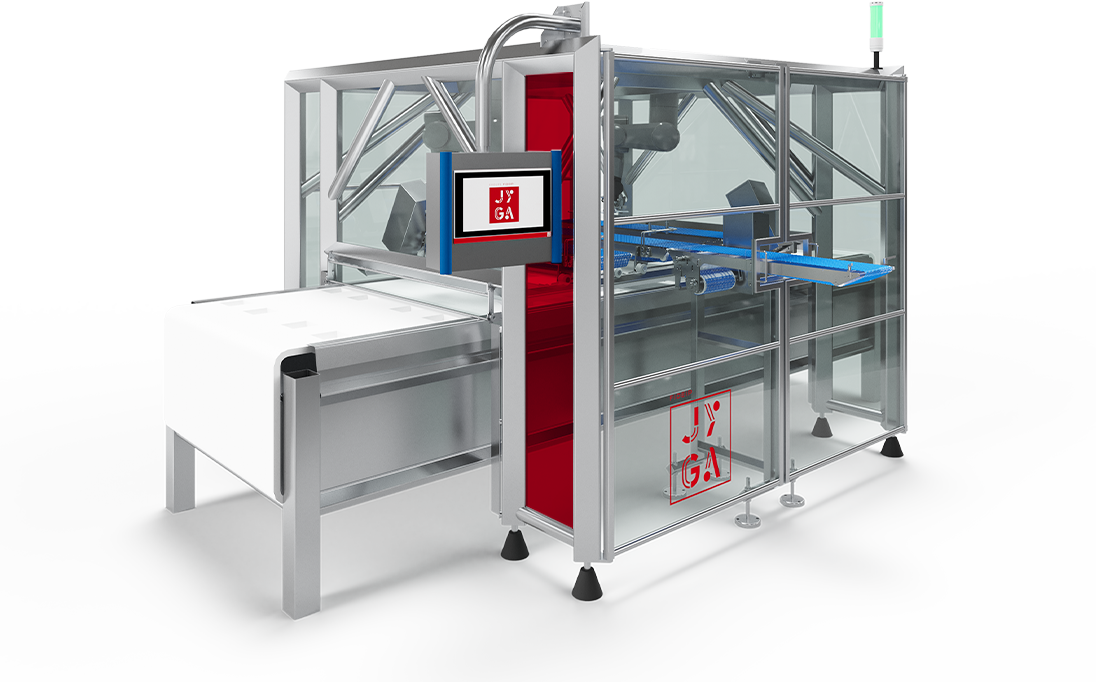
Robotic loading
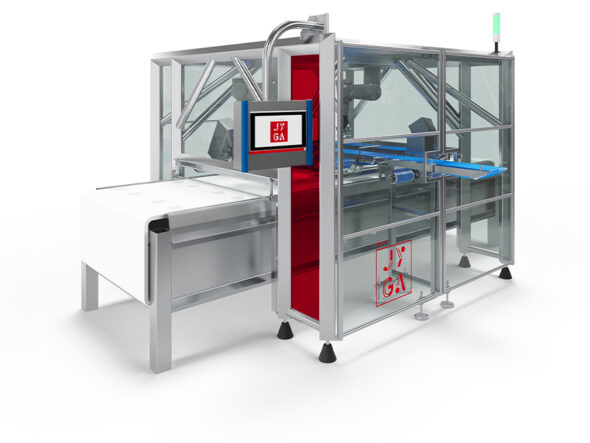
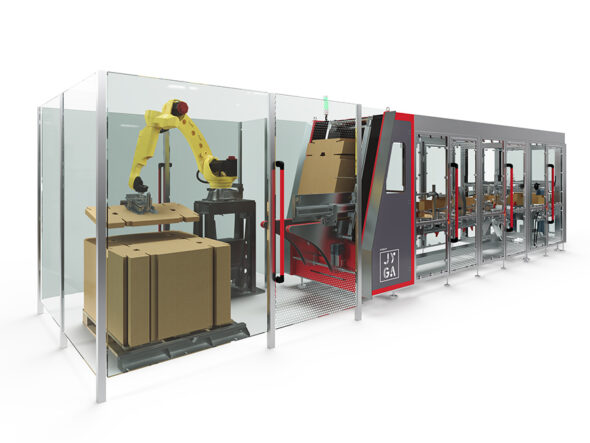
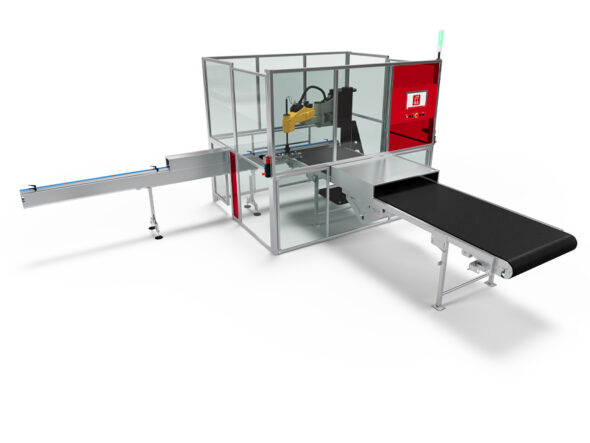
JYGA, your partner forrobotic loading projects
Needmore information?
Our sales teamis here to help!
They trust us





















What our customers say
Agri-food
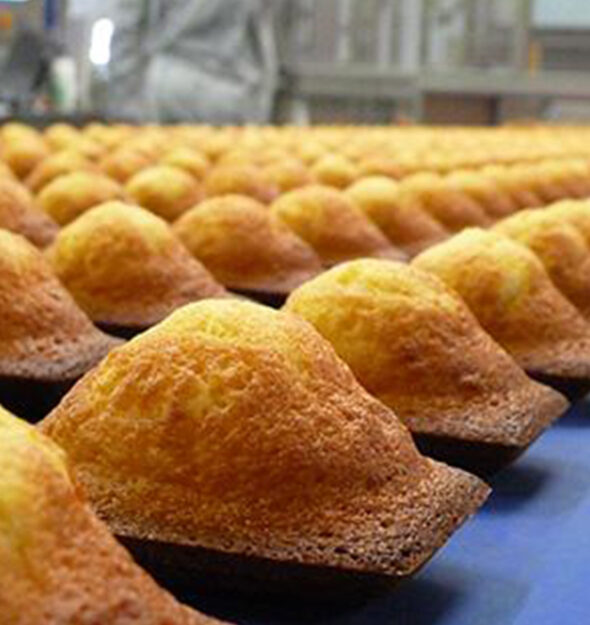
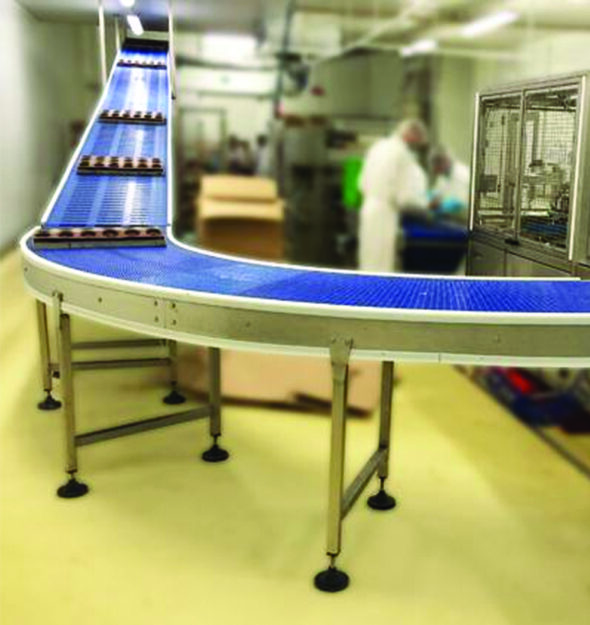
Loading Madeleines into a Flow-Pack Machine
This case study uses an advanced robotic cell for automated, precise loading of madeleines (unpackaged products) into a flow-pack machine. A key benefit is high performance, with maximum throughput of 500 madeleines per minute. The system also increases line resilience through integrated buffer conveyors. Products can be stored if the flow-wrapper stops, providing up to 9 minutes of autonomy and maximising overall production uptime. The installation is also flexible, handling several madeleine formats, while its design is optimised for operator ergonomics and compact integration into the production environment.
Our latest projects
in robotic loading
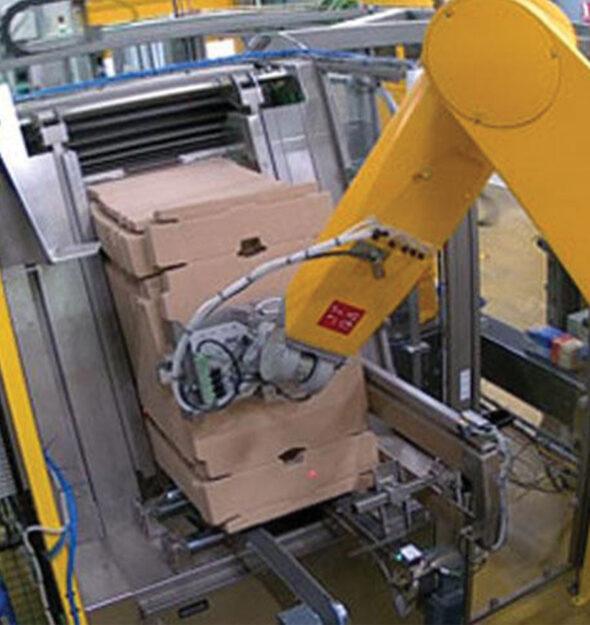
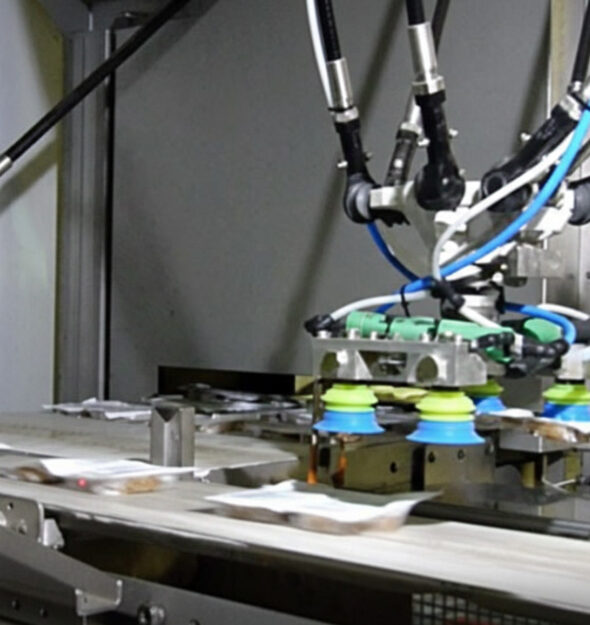
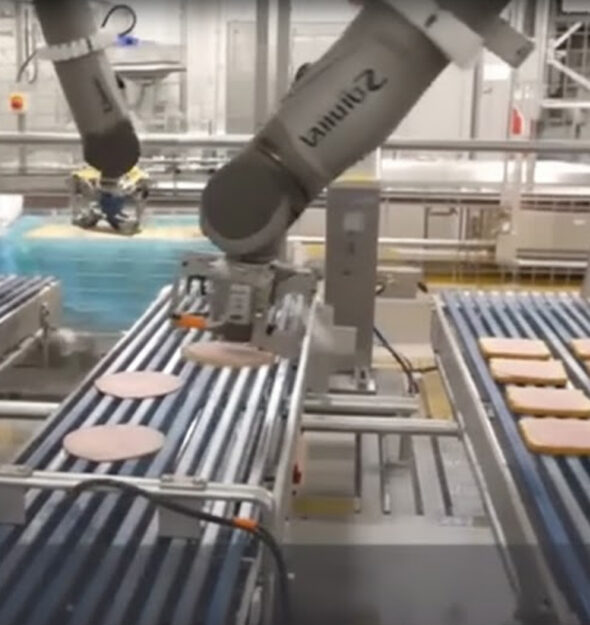
Discover our latest robotic loading projects and see what JYGA actually implements for its customers. Through these projects, you can see how we secure cases and packaging, improve productivity and ensure consistent results, whatever the throughput or format. Explore these examples to picture your own project and identify the solution best suited to your needs.
Our method
01
Pre-sales
02
Order
03
Delivery and installation
04
Commissioning
05
Final acceptance
01– Pre-sales
Pre-sales
Everything starts with a clear, practical discussion: throughput targets, case formats, packaging types, installation constraints, expected safety level, and more. JYGA advises you on the most suitable solution and prepares a detailed, costed proposal. You move forward with a clear view of the expected result, target performance and return on investment.
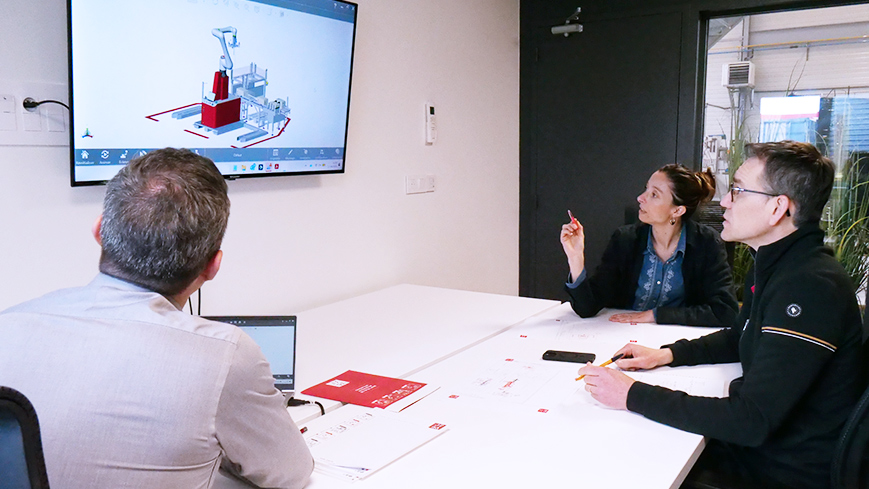
02– Order
Kick-off meeting at the customer site
The kick-off meeting defines the project framework from the outset: throughput targets, formats, cases and packaging to be handled, installation constraints and performance expectations. JYGA reviews the schedule with you, along with interfaces with existing equipment and the key points to secure, ensuring smooth deployment and a compliant result.
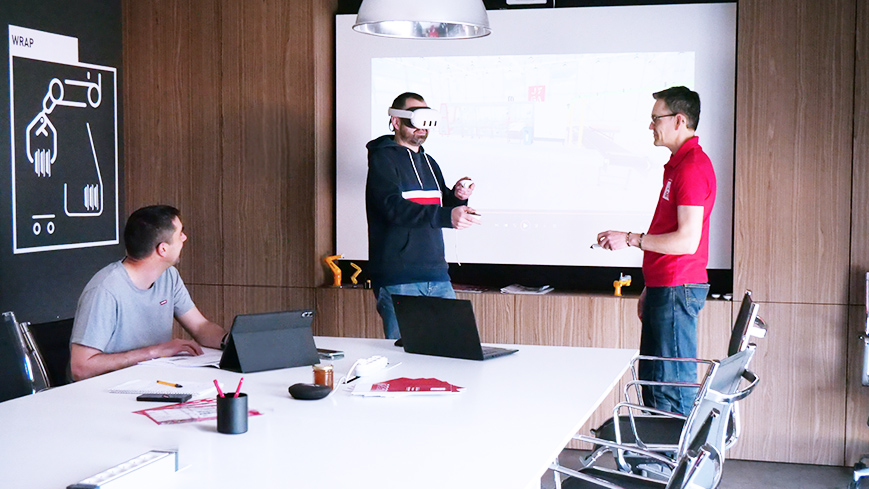
02– Order
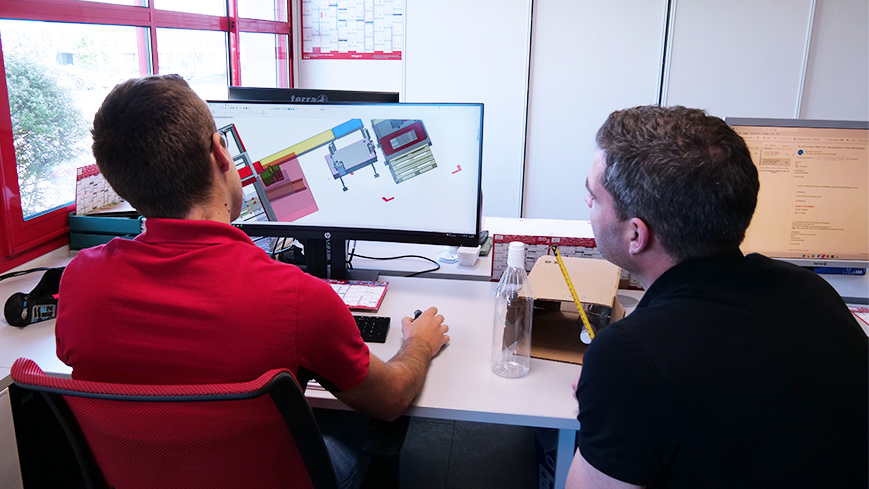
Layout review at JYGA in virtual reality
Reviewing the layout in virtual reality allows the installation to be validated before manufacturing and installation. Using a 3D model, you can visualise the entire system: footprint, operator access, maintenance areas, interfaces with existing equipment and the flow of cases and packaging. This stage secures integration and confirms that the solution meets your production and safety constraints.
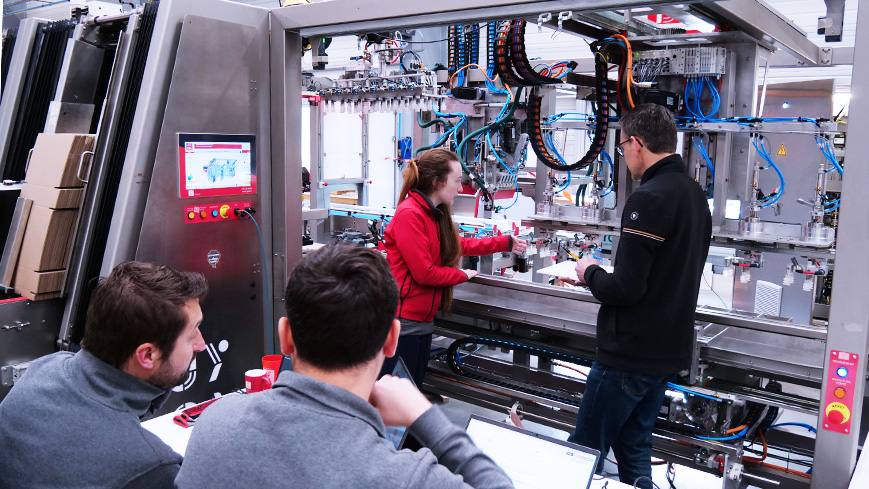
02– Order
Preliminary acceptance at the JYGA workshop
Before shipment, we carry out a Factory Acceptance Test (FAT) at our workshop to check the overall operation of the system. The tests reproduce your conditions: product handling, format changes, closing quality and case integrity, and consistency of packaging flows. This stage reduces installation risks and speeds up ramp-up at your site.
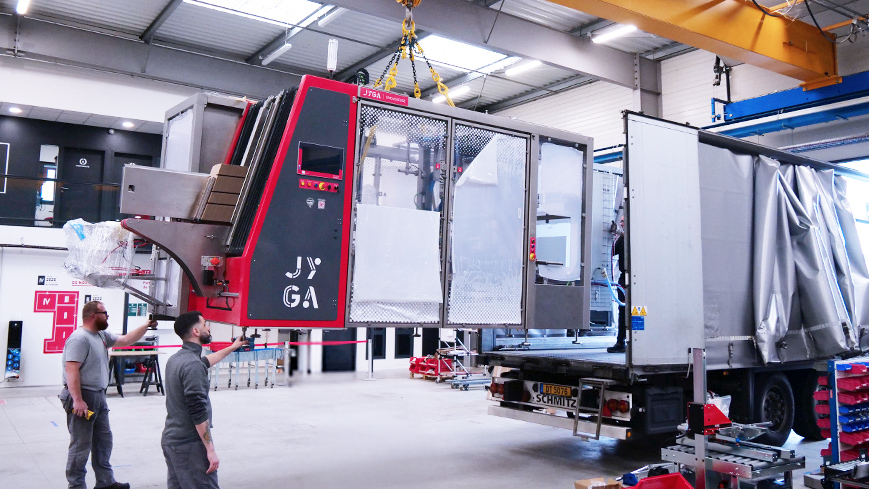
03– Delivery and installation
Delivery and installation
We handle delivery and on-site installation while respecting your production constraints. JYGA teams coordinate positioning, connections and integration into your environment. Every stage is planned to minimise production downtime and achieve a smooth, uninterrupted end-of-line solution.
04– Commissioning
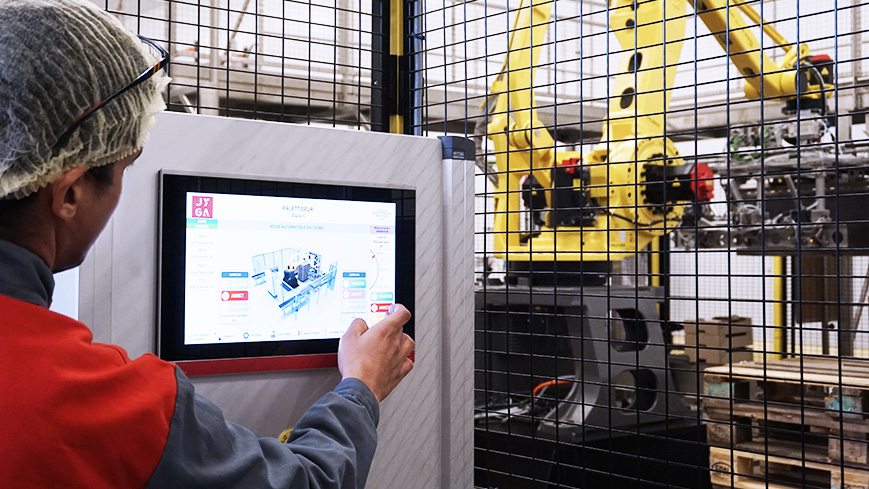
Acceptance at your facility (SAT)
The Site Acceptance Test (SAT) confirms that your solution achieves its performance targets under real operating conditions. We validate throughput, repeatability, closing quality and case integrity, as well as continuity of packaging flows through to dispatch. This stage secures start-up, reduces production disruption and ensures a solution that meets your standards.
04– Commissioning
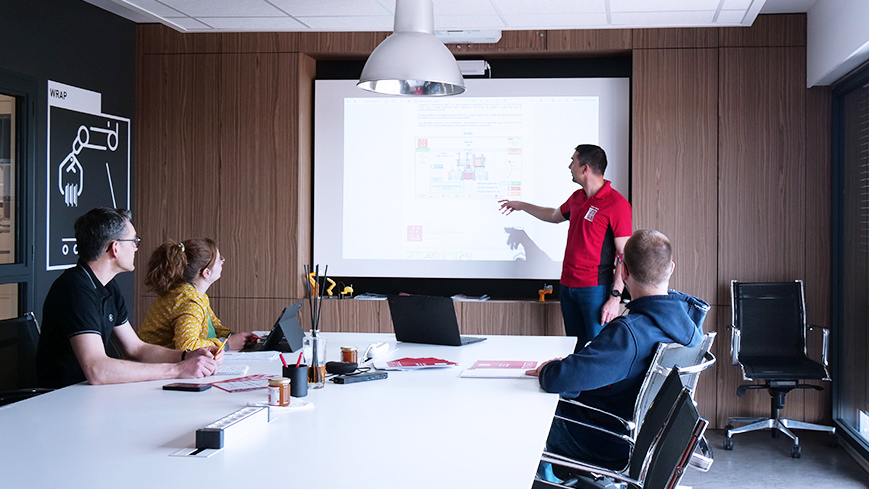
Staff training
JYGA trains your operators and technicians to run the installation independently. Settings, format changes, quality checks, best practices and first-level maintenance are all covered to keep the equipment stable and efficient. The objective is simple: preserve the quality of cases and packaging, save time every day and ensure reliable operation over the long term.
05– Final acceptance
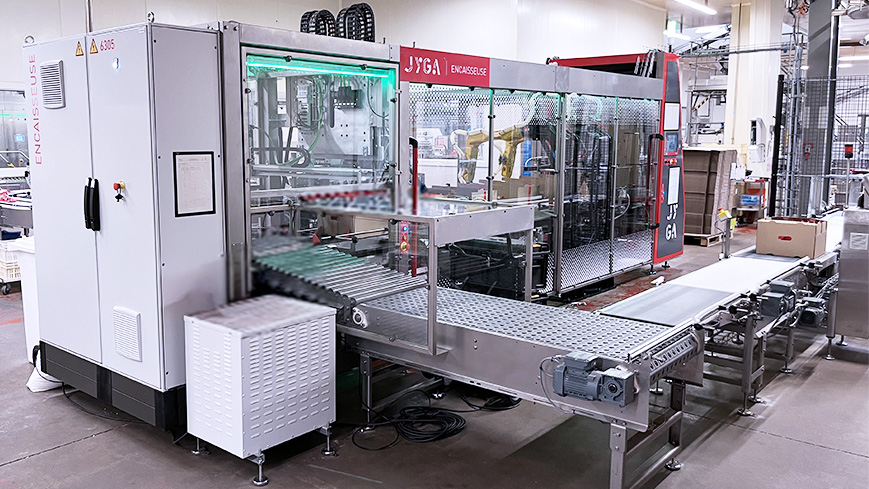
Final acceptance
Once the objectives have been achieved, final acceptance formally confirms that the installation is compliant. Performance, safety and operation are validated together. JYGA remains by your side after production start-up, providing long-term support and follow-up solutions to maintain the reliability of your installation and adapt your equipment as your needs evolve.
We invite you to our showroom
Come and discover our showroom and talk to our specialists. On site, we present solutions tailored to your packaging projects.
7 rue Edouard Branly – 49280 La Séguinière
Monday to Friday, 8:00 am to 5:30 pm
FAQ
What machines can be fed by a robotic loading cell?
A robotic loading cell can feed several types of packaging machines, including a flow wrapper, thermoformer or cartoner. The robot picks the products at the infeed, orients them if necessary, then places them into the machine according to the required cycle: flights, buckets, cavities or a timing conveyor. The choice of solution depends on the product, throughput, required level of automation and the space available on the line.
What products can be loaded automatically?
Robotic loading cells can handle unpackaged or already packed products: trays, pots, sachets, pouches, doypacks, flow packs, individual products or prepared batches. The gripping solution is designed according to the product shape, stability, weight, orientation and sensitivity during handling. An engineering phase is used to define the right tooling, robot trajectory and any inspections to be integrated.
Can a robotic cell be integrated into an existing line?
Yes. A robotic loading cell can be integrated with an existing machine, provided the mechanical, electrical and automation interfaces are studied. The analysis also covers product flows, operator access, conveyor heights and available space. This approach makes it possible to automate a manual step without replacing the entire packaging line.
Learn more about robotic loading
No content found.
Robotic loading: automate the feeding of your existing machines
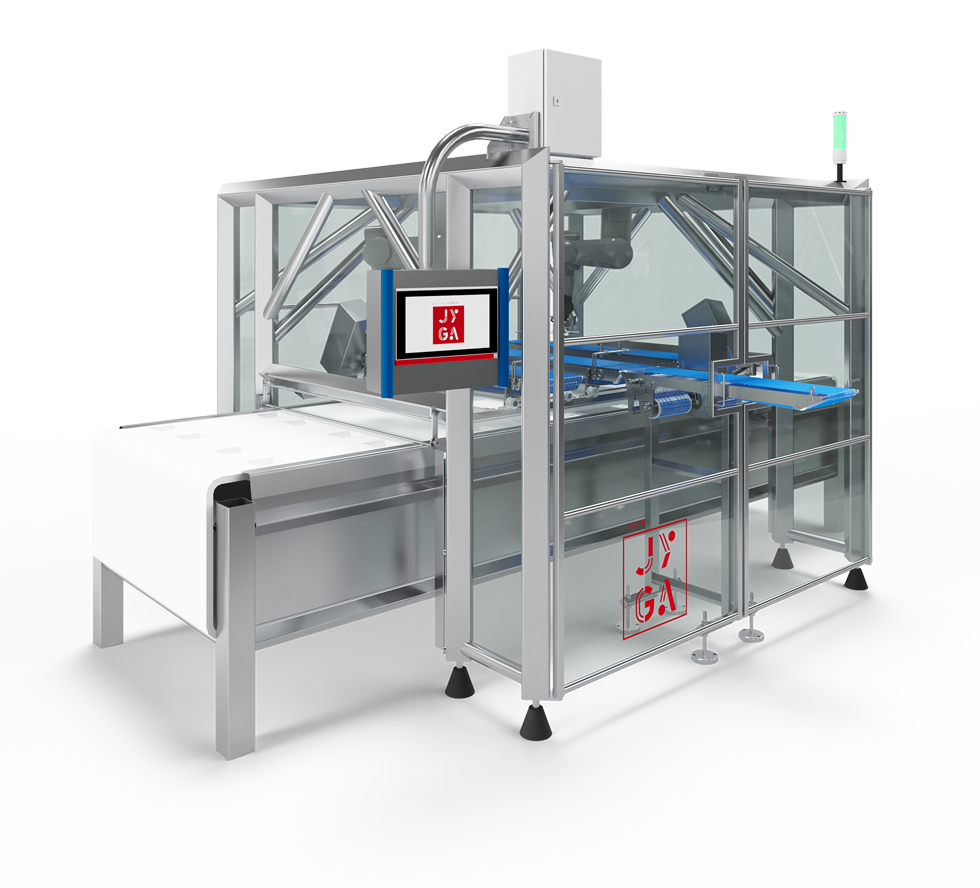
Robotic loading automates a step that is often carried out manually: feeding a packaging machine that is already in place or integrated into a new line. JYGA designs robotic cells to load products into a flow wrapper, thermoformer or cartoner, with gripping adapted to the product, its shape, throughput and presentation method.
These systems are designed for manufacturers looking to reduce repetitive tasks, stabilise machine feeding and improve the organisation of production flows. Products may be unpackaged or already packed: trays, pots, doypacks, sachets, flow packs, food products, cosmetics or pharmaceuticals. Depending on the project, the cell can incorporate vision guidance to orient products before placing them into flights, buckets, cavities or timing conveyors.
The integration of a robotic loading cell is defined according to your actual constraints: product type, required throughput, available footprint, operator access, hygiene, interfaces with existing equipment and inspection requirements. JYGA can also incorporate additional functions around the cell, such as product turning, labelling, marking, vision inspection, weighing or the insertion of objects and leaflets.
Whether the requirement is automatic flow-wrapper loading, thermoformer feeding or cartoner loading, the objective remains the same: to integrate a solution that is consistent with your line, your products and your operating constraints.