
Our packaging cobots
JYGA packaging cobots are designed to work safely alongside your operators, improving efficiency while reducing fatigue and handling errors. Whether you need to case pack your products, palletise them or prepare them for dispatch, our cobots provide a flexible automation solution for end-of-line packaging. Equipped with advanced technologies, they help maintain a high level of productivity. Thanks to their ability to adapt to different tasks and their straightforward programming, they can be deployed to handle a wide range of products and packaging configurations.
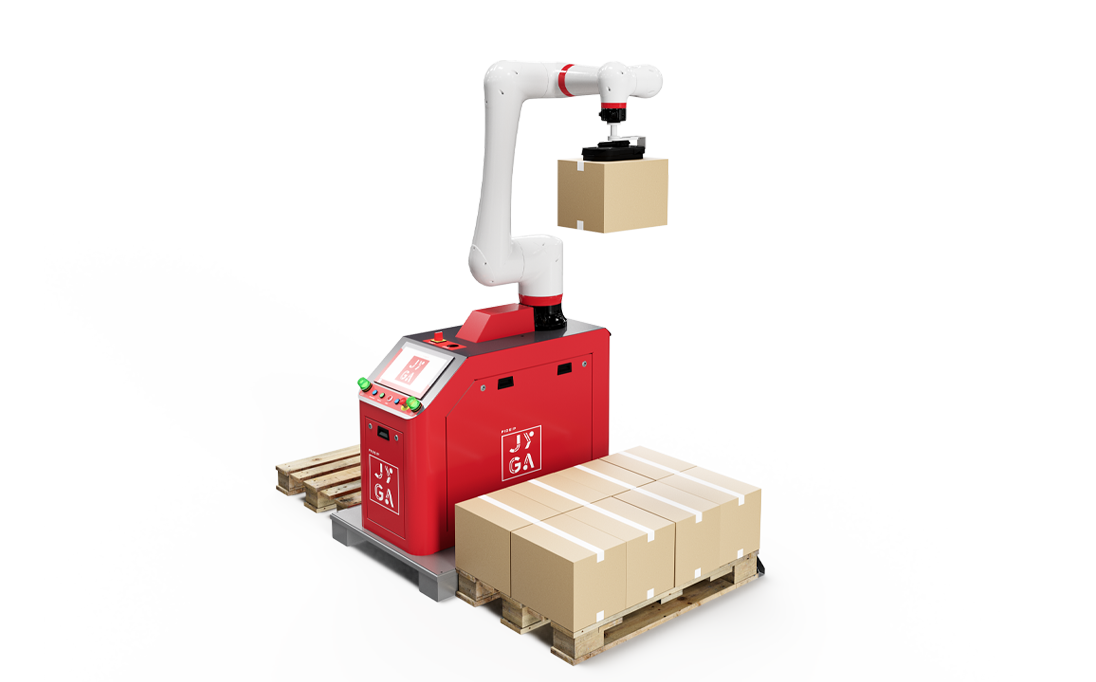
Cobot Palletiser
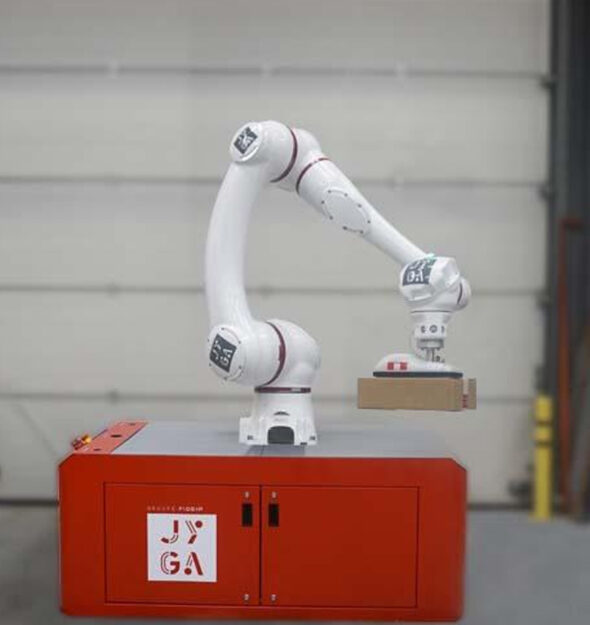
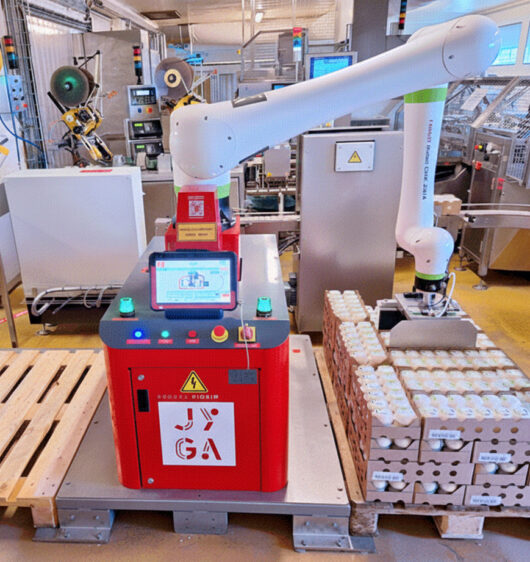
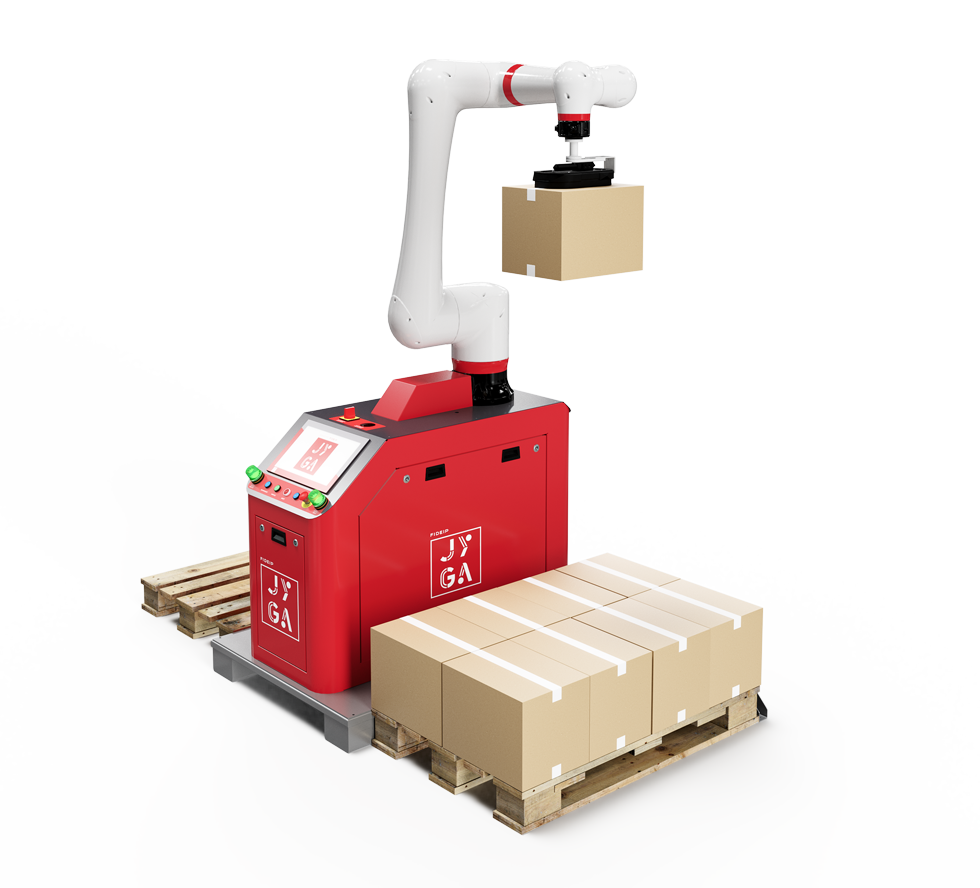
The cobot palletiser integrates a collaborative robot capable of building pallets of cases, boxes or packaged products, with a compact layout and, depending on the selected configuration, no safety fencing required to optimise the palletising process.
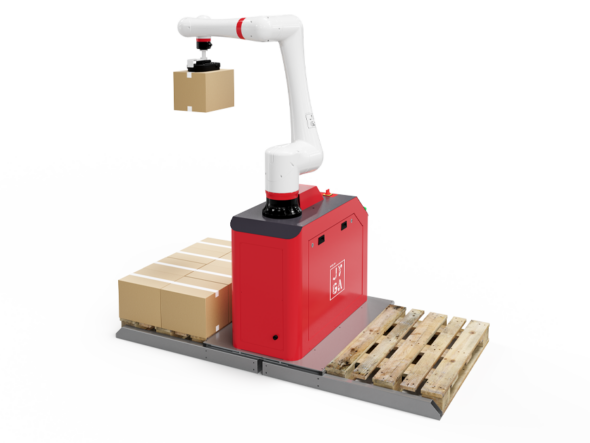
Cobot Case Packer
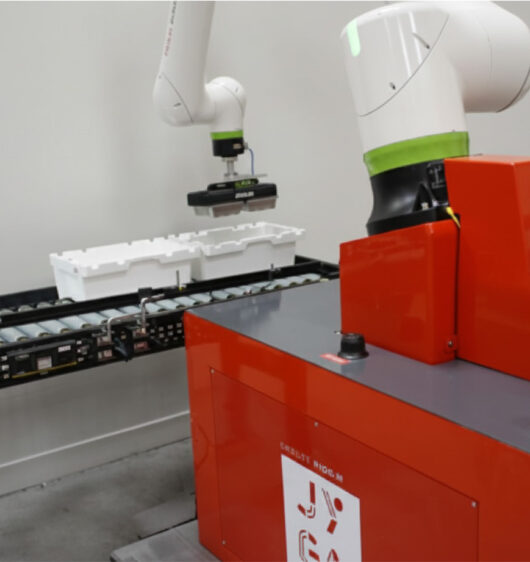
JYGA developed cobot case packing based on its long-standing expertise in case packing. With the cobot case packer, the aim is to offer a compact, mobile and easy-to-integrate collaborative robotics solution for automating product case packing at medium throughput.
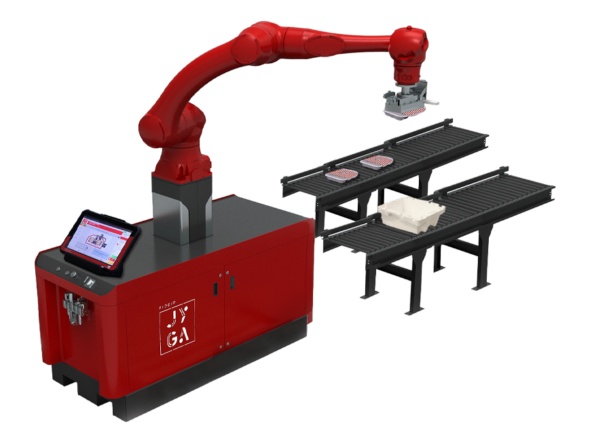
JYGA, your partner foryour packaging projects
Needmore information?
Our sales teamis here to help!
They trust us
















What Our Customers Say

Agri-food
Cobot Palletizer for Open Trays
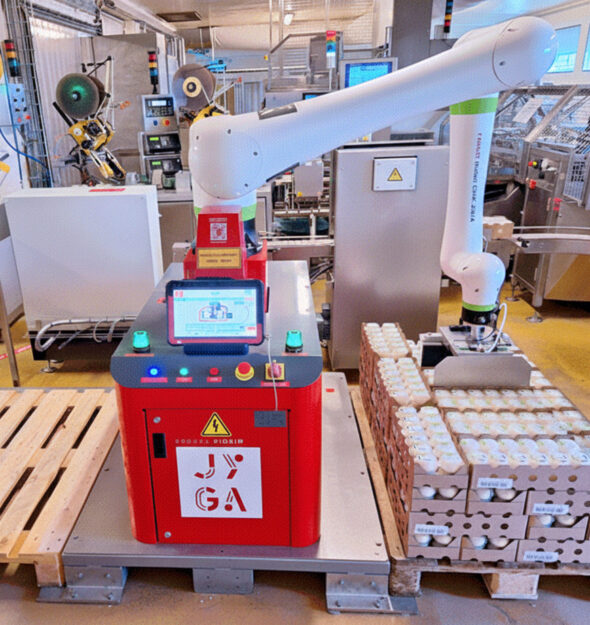
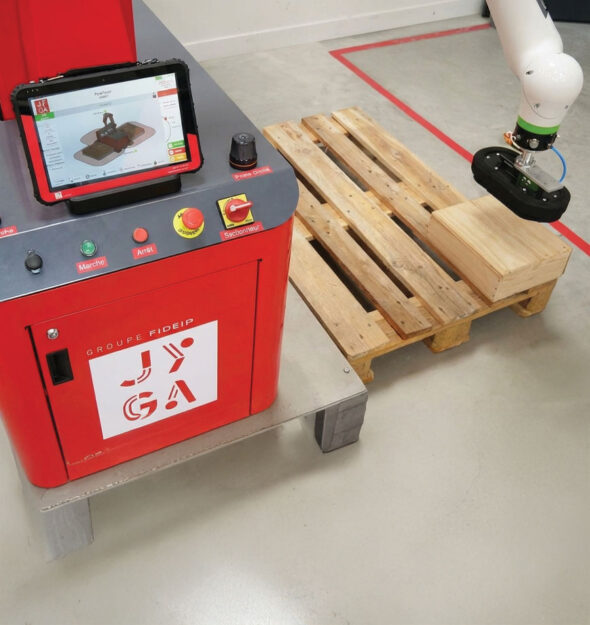
JYGA installed a Pal’it Air collaborative palletizer for open trays of goat cheese at a family-owned dairy. Empty pallets are placed by the operator at two floor positions. At the case-packing outfeed, labelled packs are stacked if required and then conveyed to the cobot. Using its dedicated gripper, Pal’it Air picks the packs and places them on the pallet according to the pattern defined in JY’TOOL software. The cobot alternates between the two stations, significantly reducing physical strain while producing consistent, stable pallets.
Our latest projects
in cobotics
Explore our latest collaborative robotics case studies and see what JYGA delivers on real customer sites. Through these projects, you will discover how we help secure the handling of your cases and packaging, improve productivity and deliver consistent results, whatever the throughput rates and formats. Browse these examples to better visualise your project and identify the solution best suited to your needs.
Our Method
01
Pre-sale
02
Order
03
Delivery and Installation
04
Commissioning
05
Final Acceptance
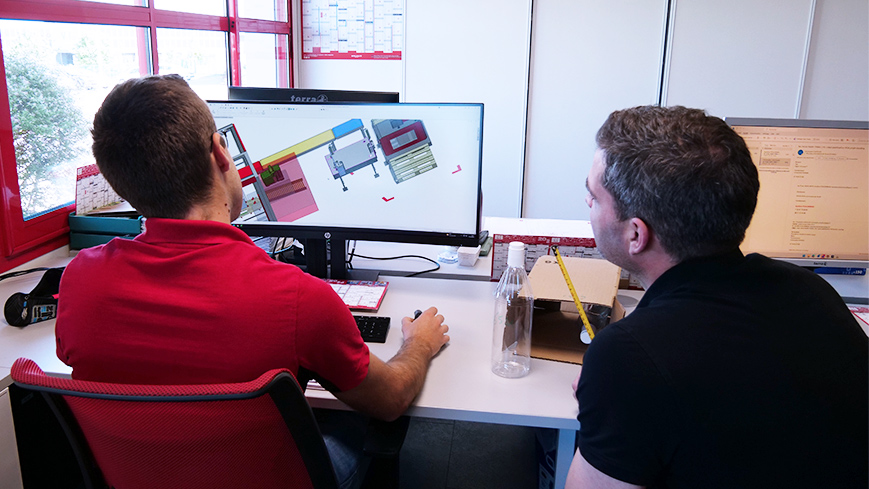
01- sales
Pre-sales
Everything starts with a clear, practical discussion: throughput targets, case formats, packaging types, layout constraints, expected safety level, and more. JYGA helps you identify the most suitable solution and prepares a detailed, well-supported proposal. You move forward with a clear view of the expected outcome, target performance levels, and return on investment.
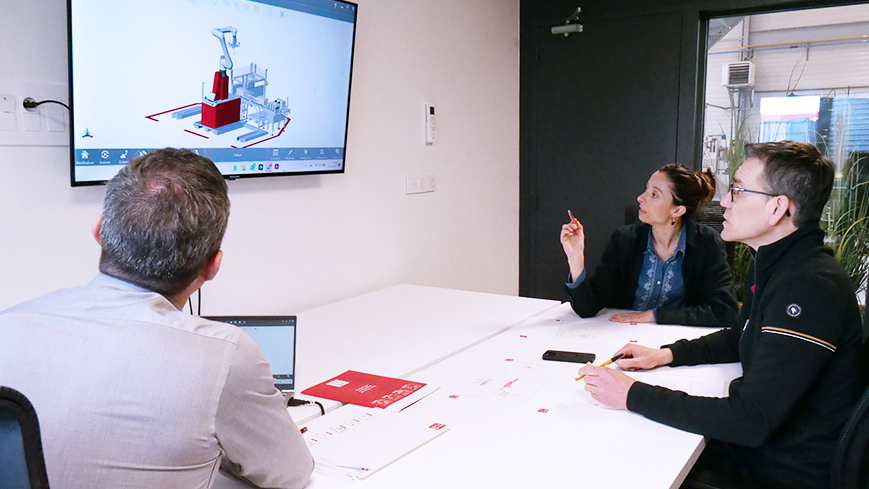
02- order
Kickoff meeting at the customer site
The kickoff meeting sets the project framework from the start: throughput targets, formats, cases and packaging to be handled, layout constraints, and performance expectations. JYGA reviews the schedule with you, validates the interfaces with your existing equipment, and identifies the key points to secure in order to ensure a smooth deployment and compliant results.
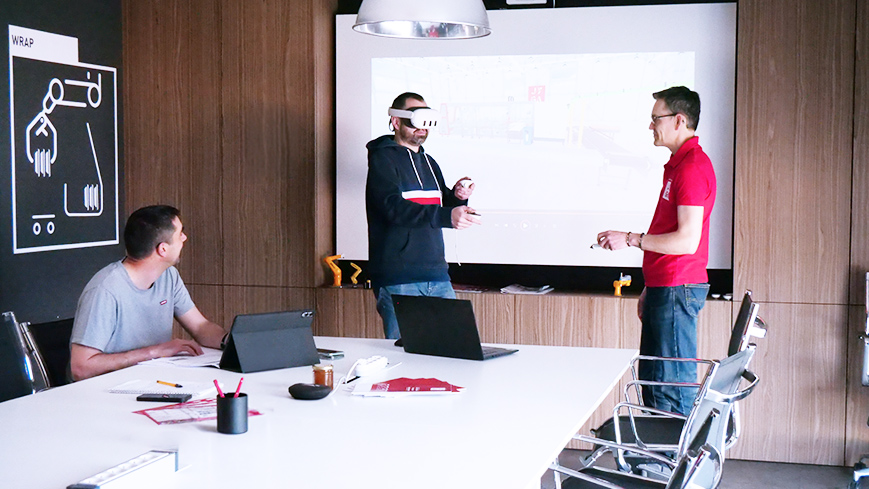
02- order
Virtual reality design review at JYGA
The virtual reality design review allows you to validate the layout before manufacturing and installation. Based on a 3D model, you can visualize the entire system: footprint, operator access, maintenance areas, interfaces with existing equipment, and the flow of cases and packaging. This step helps secure the integration and confirms that the solution meets your production and safety constraints.
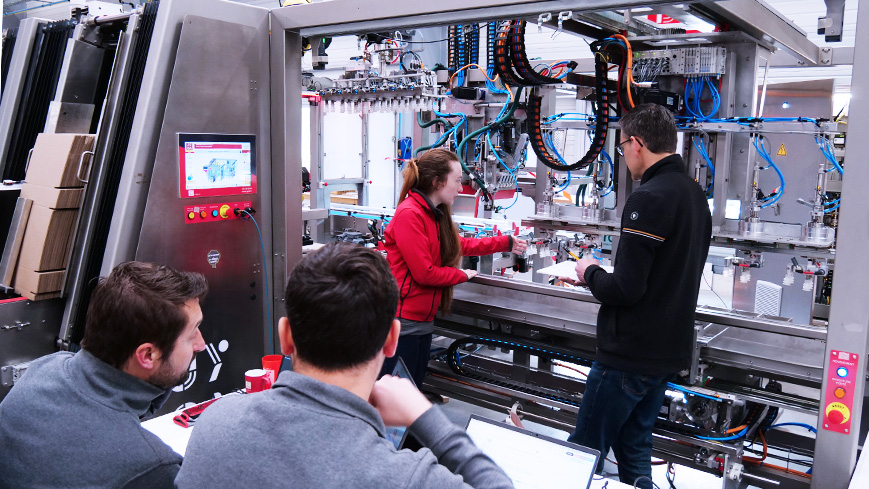
02- order
Factory Acceptance Test at JYGA
Before shipment, we carry out a Factory Acceptance Test (FAT) at JYGA to check the overall operation of the system. The tests reproduce your production conditions: product picking, format changeovers, closure quality and case integrity, and the consistency of packaging flows. This step reduces risks during installation and speeds up ramp-up at your site.
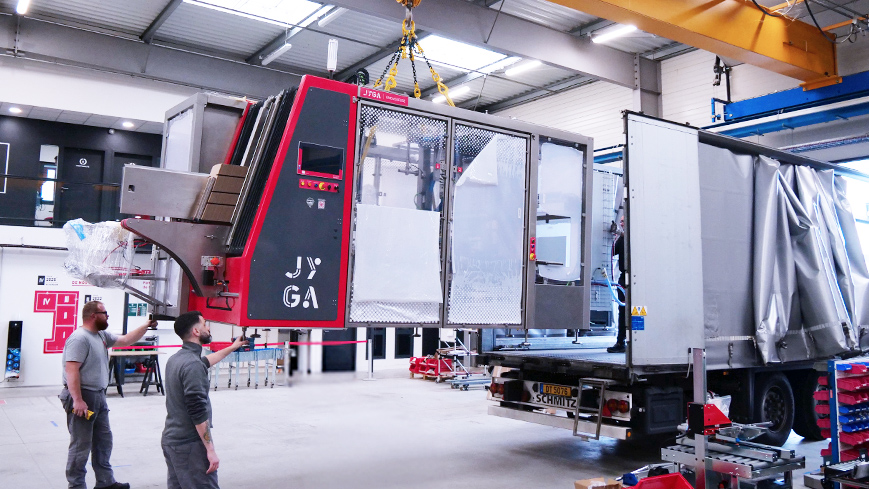
03- delivery and installation
Delivery and installation
We handle delivery and on-site installation while taking your production constraints into account. JYGA’s teams coordinate equipment setup, connections, and integration into your existing environment. Each step is designed to minimize production downtime and deliver a smooth, uninterrupted end-of-line packaging solution.
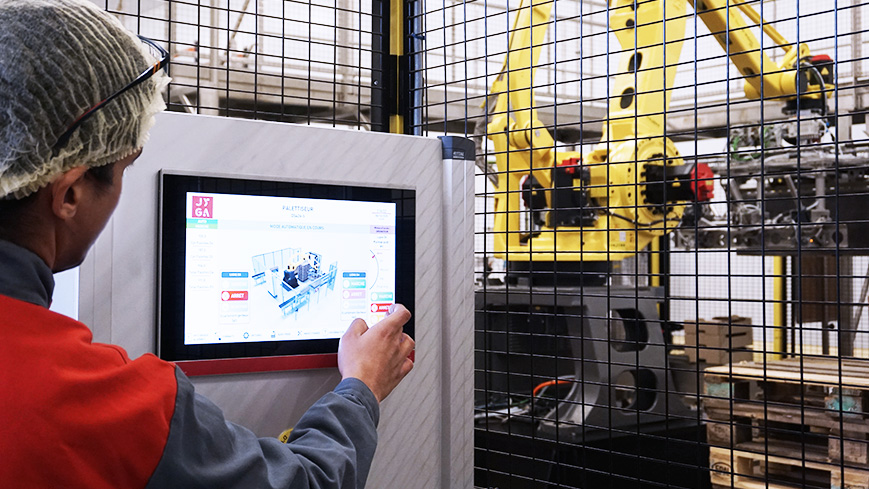
04- commissioning
Site Acceptance Test in your facility (SAT)
The Site Acceptance Test (SAT) confirms that your solution reaches the expected performance levels under real production conditions. We validate throughput, repeatability, closure quality and case integrity, as well as the continuity of packaging flows through to shipping. This step secures startup, reduces production uncertainties, and ensures a solution that meets your standards.
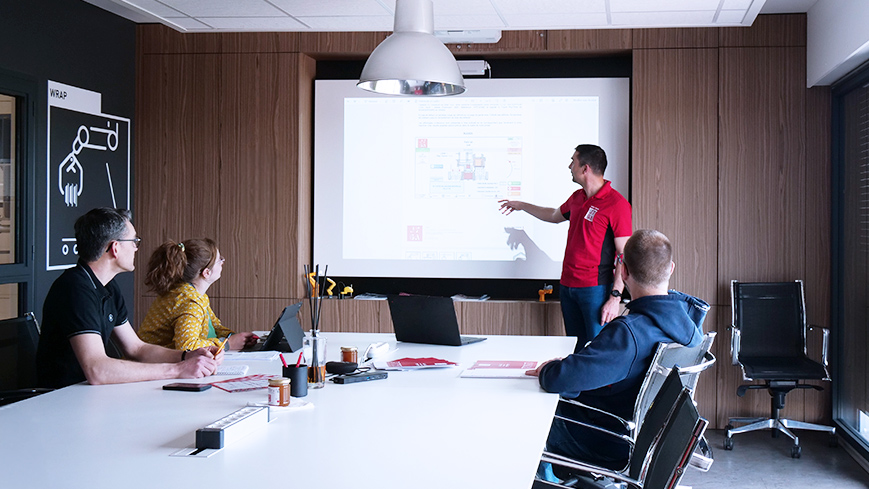
04- commissioning
Staff training
JYGA trains your operators and technicians so they can operate the system independently. Settings, format changeovers, quality checks, best practices, and basic maintenance are all covered to keep the equipment stable and efficient. The goal is simple: preserve case and packaging quality, save time in daily operations, and support long-term production performance.
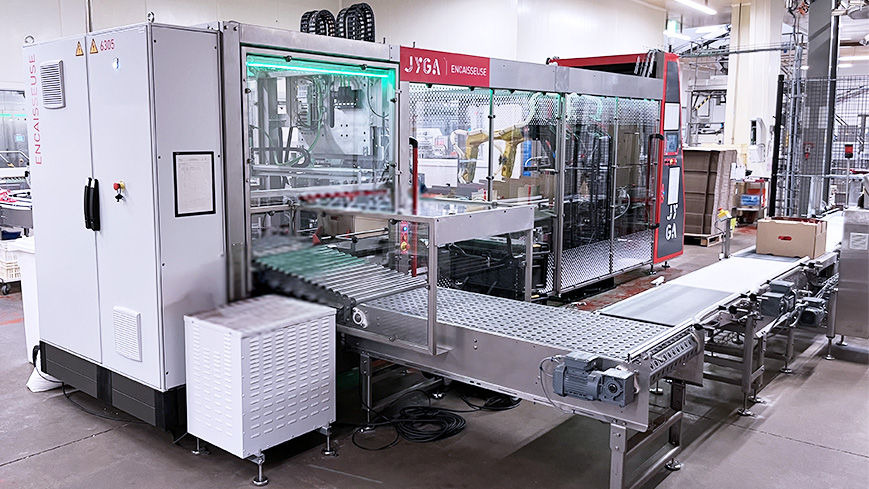
05- final acceptance
Final acceptance
Once the objectives have been reached, final acceptance formally confirms that the installation meets the required specifications. Performance, safety, and operation are validated together. JYGA remains by your side after production startup, with long-term support and follow-up solutions to help maintain the performance of your installation and adapt your equipment if your needs evolve.
JYGA expertise in end-of-line collaborative robotics
Since 1992, JYGA has supported manufacturers in the food and beverage, healthcare, cosmetics, personal care and logistics sectors with robotic end-of-line packaging machines.
From cartoning to palletising, including case packing, JYGA has developed a range of cobot solutions based on its long-standing expertise.
However, integrating a cobot palletiser or a cobot case packer into a production line raises questions around organisation, operation and change management. JYGA’s teams are there to analyse your environment, define the right collaborative application and guide you towards the most suitable collaborative packaging solution.
Visit our showroom
Come visit our showroom and talk with our specialists. On site, we will present solutions tailored to your end-of-line packaging projects.
7 Rue Edouard Branly, 49280 La Séguinière, France
Monday to Friday, 8:00 AM to 5:30 PM
How to prepare your collaborative robotics project
How do you get started with a collaborative robotics project on an end-of-line packaging line ?
A collaborative robotics project starts with an analysis of the existing line: which tasks are physically demanding or repetitive, where bottlenecks occur, and what space and flow constraints need to be considered. From there, a priority workstation is identified, such as palletizing, case packing, or machine feeding, and a target scenario is defined: throughput, formats, and interactions with operators. A layout study and, when needed, product testing help validate feasibility. The project then continues with the installation of the cobot cell, team training, and a ramp-up phase under real production conditions to fine-tune the settings and secure performance.
Cobot or traditional robot: when is collaborative robotics the most relevant choice ?
Collaborative robotics is especially relevant when the system needs to operate close to operators, in limited floor space, or with formats that may change over time. A traditional industrial robot is often preferred for very high speeds, very heavy loads, or environments that require strict guarding. A cobot, on the other hand, offers greater flexibility: easier-to-adapt trajectories, faster reconfiguration, and possible mobility between several lines. It also makes it possible to introduce automation step by step, without completely reorganizing the production area from the start.
What impact does integrating a cobot have on team organization ?
Adding a cobot mainly changes how tasks are distributed. Operators spend less time handling cases or heavy loads and more time operating, monitoring, and feeding the cell. This means involving them early in the project, training them on how the solution works, and clarifying their new roles. When properly prepared, this change is often well received: the workstation becomes more comfortable, the most repetitive movements are reduced, and the work shifts toward control, quality, and priority management on the line.
What should be monitored to keep a cobot cell easy to use every day?
To keep a cobot cell easy to operate, several points are important: a clear control interface, guided format changeovers, and good accessibility for adjustments and basic maintenance. Simple operating procedures and short training sessions help teams become more autonomous without constantly relying on an automation specialist. It is also important to consider cleaning needs, conveyor access, and access to peripheral equipment from the start. Finally, regular monitoring of key indicators helps detect deviations quickly and adjust settings to keep the cell efficient and pleasant to use.
Learn more about cobotics
Collaborative robotics and end-of-line packaging
The role of packaging cobots
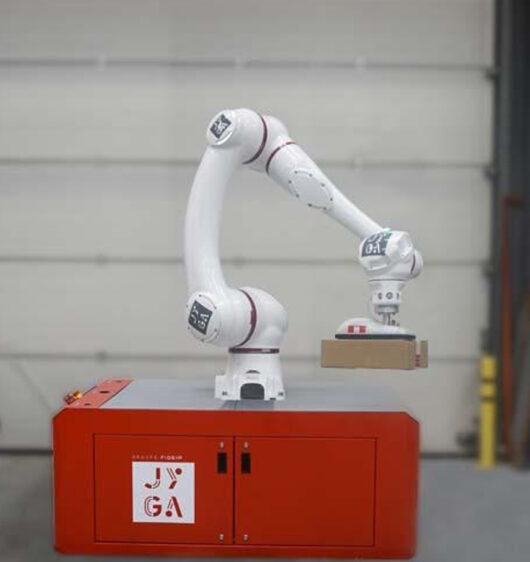
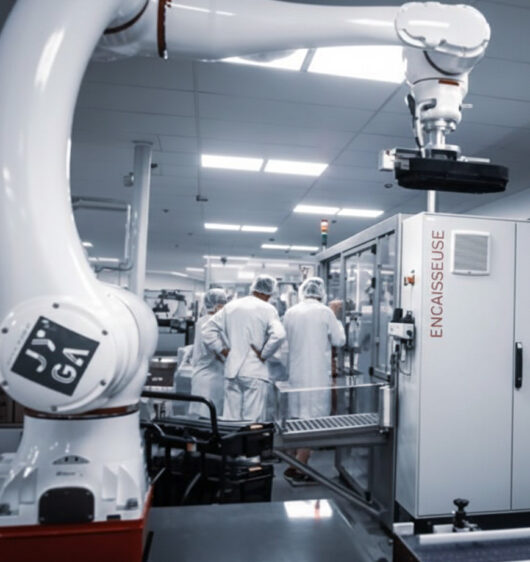
A packaging cobot automates operations such as case packing and palletizing, while being designed to work close to operators. It can be deployed on different lines to handle multiple products and packaging configurations, depending on flow, throughput, space, and container constraints.
Collaborative packaging therefore supports smooth cooperation between people and machines, using adapted safety and detection systems to improve productivity while maintaining consistent quality.
Cobot palletizers: compact design and productivity gains
Cobot palletizers help save time and floor space while ensuring precise and safe handling of heavy loads. Compact and flexible, they can be easily integrated into production areas and operate safely alongside teams, thanks to advanced sensors that detect products to be stacked and interactions with the surrounding environment.
Cobot case packers: collaborative case packing and flexibility
Cobot case packers, at the heart of collaborative case packing systems, handle product packing and case loading operations. These collaborative packaging machines combine the benefits of automation with operator-friendly operation: they fold, load, and seal cases accurately, while remaining easy to reconfigure when formats change.
Equipped with vision systems and sensors, they adapt to a variety of product sizes and shapes and can integrate quality checks to reject non-compliant packaging.
Benefits for performance and working conditions
In terms of performance, cobots bring consistency and help secure the repeatability of movements, making it easier to stabilize throughput and reduce production variability.
In terms of working conditions, they take over repetitive and physically demanding tasks, such as handling and repeated placing operations, helping to reduce fatigue and the risk of musculoskeletal disorders. Easier to use than a traditional industrial robot, they are quickly adopted by production teams.