What Is an Industrial Thermoformer?
Reading time : 5 min

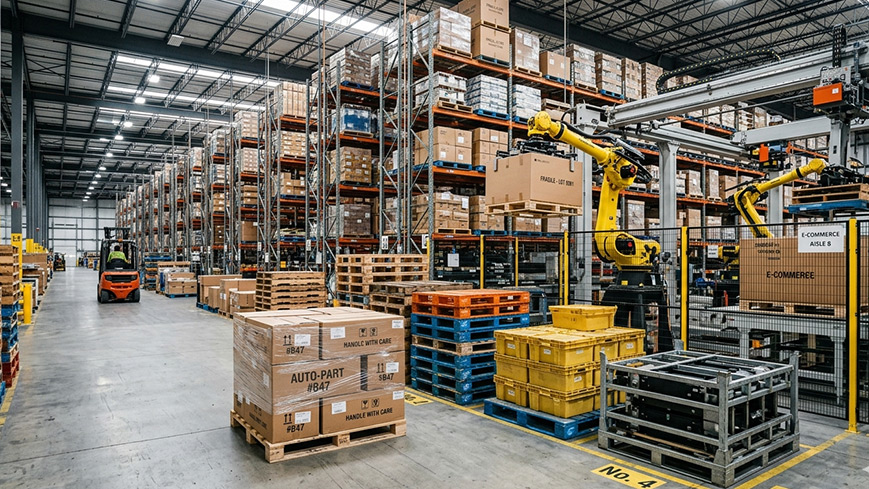
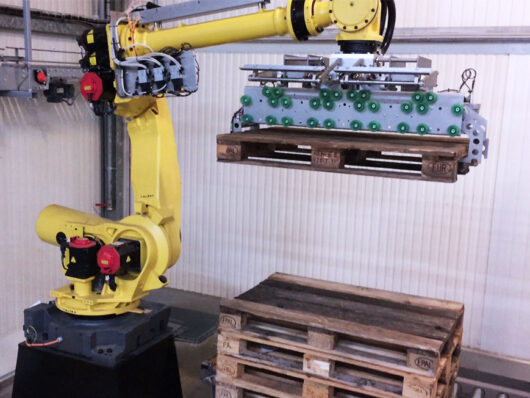
Wooden pallets are among the most widely used. Made from solid timber boards or engineered wood, they are valued for their strength and durability and can often be reused through multiple handling, palletising and transport cycles.
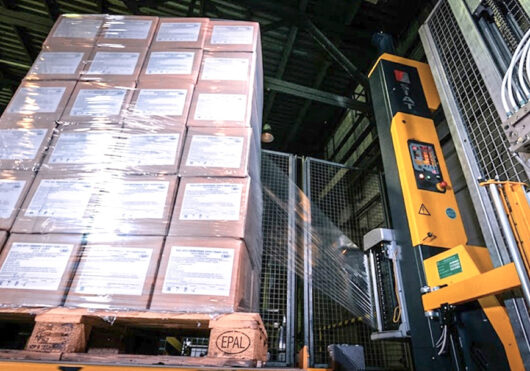
Standardised at 1,200 × 800 mm, the Euro pallet, also known as an EPAL pallet, is widely used for European logistics and international trade. The original article cites a maximum load of 1,500 kg; the allowable load in practice depends on the pallet specification and operating conditions.
The US pallet is widely used in North America and in some Latin American markets. A common size is approximately 1,219 × 1,016 mm.
A half pallet is a smaller pallet, commonly around 800 × 600 mm. It can be useful for smaller quantities of goods or deliveries where available space is limited. Load capacity depends on the pallet design and material.
Our team is here to advise you.
Plastic pallets are increasingly used in many industries. Their relatively low weight can simplify handling, and they can be suitable for international logistics where phytosanitary treatment of wooden packaging would otherwise need to be considered. Their resistance to moisture and temperature variation can make them useful for food products, chemicals and other demanding applications.
Injection-moulded plastic pallets are produced as a moulded component and can provide good strength and durability. Their cleanable surfaces can be an important advantage in environments with demanding hygiene requirements.
Thermoformed plastic pallets are produced from heated plastic sheet formed to shape. This manufacturing method can produce lightweight, economical pallets for suitable load requirements.
Although less common, pallets are also manufactured from materials such as metal, fibreglass and cardboard, each offering characteristics suited to particular constraints.
Metal pallets, often made from steel, are highly robust and durable. They can be used for very heavy or high-value loads such as industrial equipment or automotive components.
Fibreglass pallets can provide resistance to chemicals and temperature variation, making them suitable for some sensitive or hazardous-product storage and transport applications.
Cardboard pallets are lightweight, economical and recyclable. They can be useful for one-way shipments or applications where reducing transport weight is particularly important.
The most suitable pallet depends on the volume, weight and nature of the goods being transported, as well as logistics constraints and applicable regulations. Understanding the characteristics and advantages of each pallet type helps manufacturers choose a solution suited to their requirements.
Aurélie DUPONTCase Packing Division Manager

Would you like to know more? Find everything you need to know here, and much more!