What Is an Industrial Thermoformer?
Reading time : 5 min

The food and beverage industry transforms agricultural raw materials into food products and must meet a wide range of demanding requirements. Manufacturers need to pay constant attention to:
The sector also faces ongoing logistics challenges linked to supply-chain management, production and distribution.
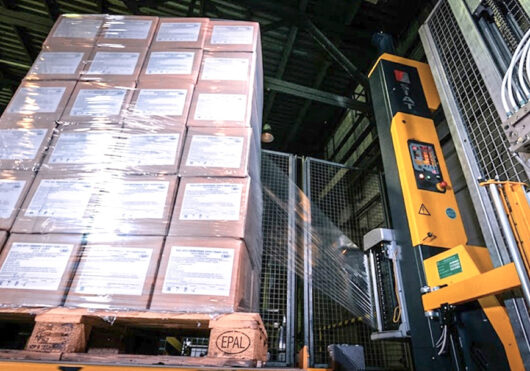
Operators working on packaging stations are particularly exposed to musculoskeletal disorders (MSDs), especially during palletising. Automating end-of-line operations reduces physical strain on operators. As well as improving working conditions, it can reduce absence and occupational illness while increasing productivity to a level that is difficult to achieve manually. Automation can also strengthen your employer brand and make your company more attractive to potential recruits.
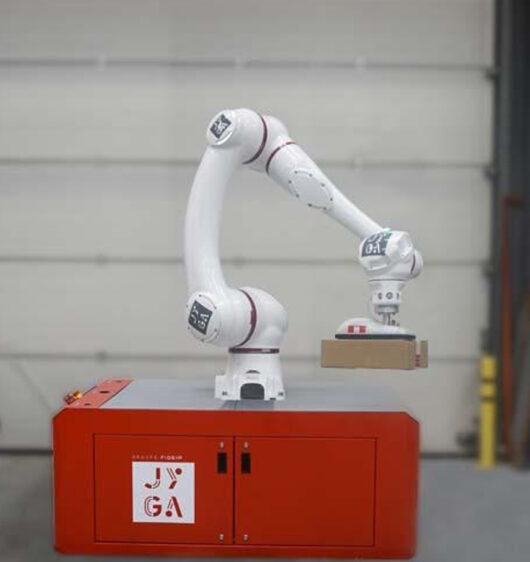
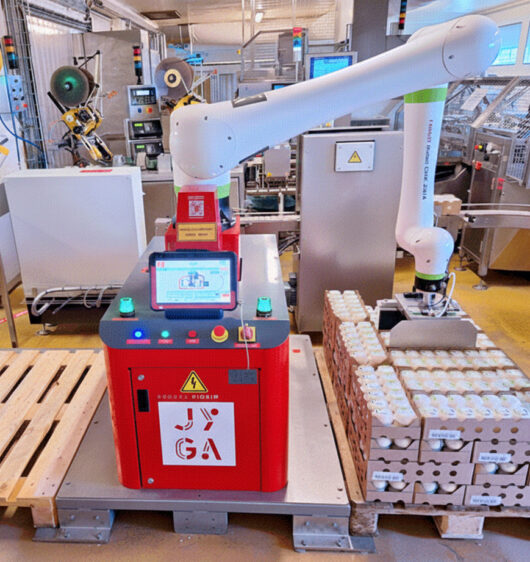
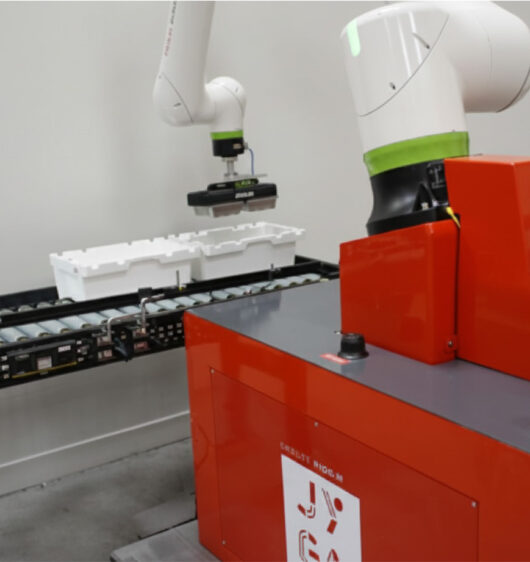
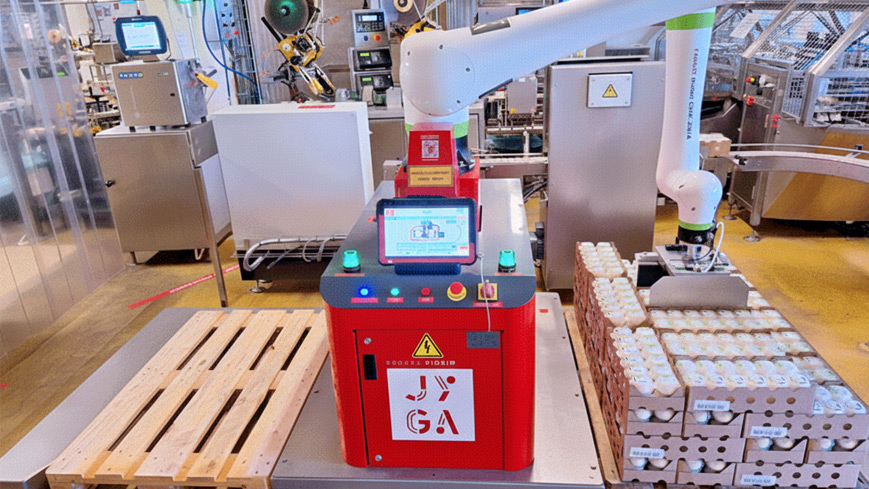
A collaborative palletiser is designed to work alongside operators. Equipped with safety sensors, the machine stops when contact is detected. It can therefore provide a high level of safety without requiring the same type of guarding as a conventional industrial palletising robot, subject to the application risk assessment. A collaborative palletiser works alongside people to automate palletising tasks.
A collaborative palletiser can be moved quickly and easily from one production line to another as requirements change. Depending on the configuration, it can be repositioned using a standard pallet truck, allowing the palletiser to switch from one production set-up to another in just a few minutes.
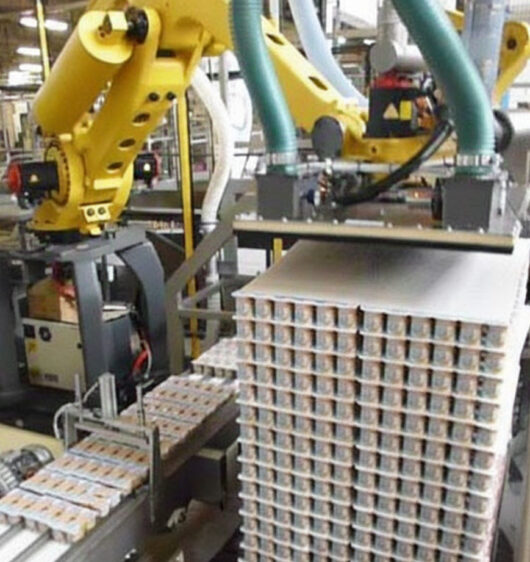
This type of palletiser can also handle a wide range of cases thanks to a vacuum gripping system. The investment can therefore be shared across several production runs.
Traditional palletising robots installed at the end of a line can take up a considerable amount of floor space, particularly because of their safety guarding. A collaborative palletiser can reduce this constraint. Its smaller footprint makes it easier to install in restricted spaces and, depending on the design, to move between lines.
Adding a collaborative palletiser to a previously manual palletising line can increase throughput. Pallet quality can also improve thanks to the cobot’s repeatability and accurate placement.
A collaborative palletiser can meet the needs of lower-throughput food and beverage production while taking physically demanding tasks away from operators. This type of equipment helps manufacturers remain competitive by combining flexibility with reliable, repeatable operation.
Aurélie DUPONTCase Packing Division Manager
Would you like to know more? Find everything you need to know here, and much more!