What Is an Industrial Thermoformer?
Reading time : 5 min

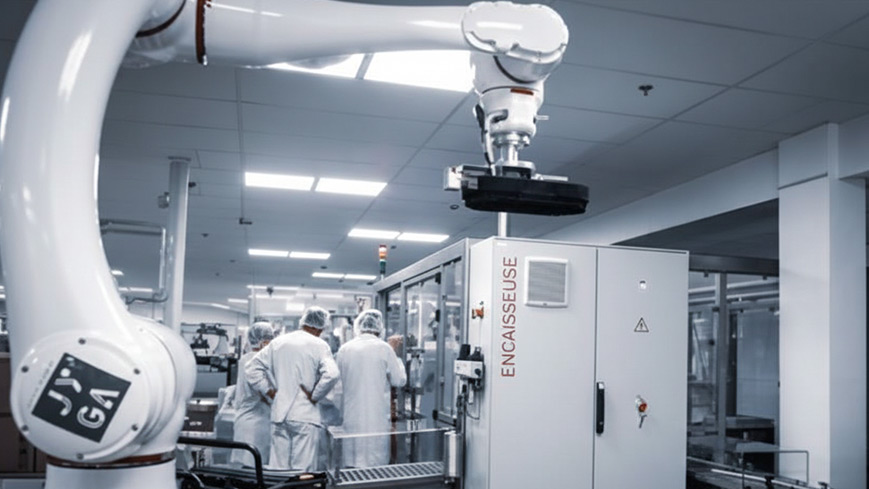
Faced with new challenges, pharmaceutical manufacturers need solutions that improve competitiveness while maintaining demanding production standards. How can collaborative robotics help the pharmaceutical industry address these requirements?
The pharmaceutical industry has faced a range of challenges for many years. The original French article highlights the scale of the sector in France, with thousands of companies and a large workforce dedicated to producing medicines and medical products to demanding quality standards.
Demand for pharmaceutical products has increased, while supply difficulties became particularly visible following the COVID-19 health crisis. These pressures have strengthened interest in resilient, competitive local production and in technologies that can support productivity.
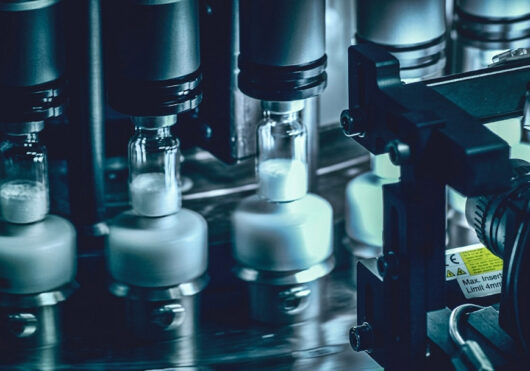
Pharmaceutical manufacturing also has highly specific production requirements. Medicines and medical devices must meet demanding hygiene standards, and some production lines must maintain product sterility through to packaging. These requirements, combined with changing demand, are encouraging manufacturers to consider new automation solutions, including collaborative robotics.
Our team is here to advise you.
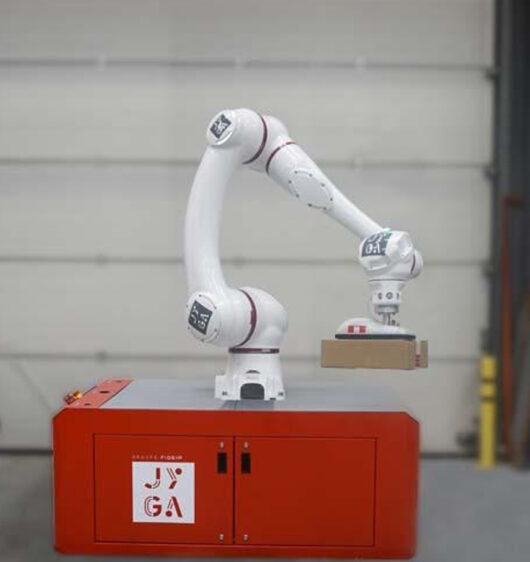
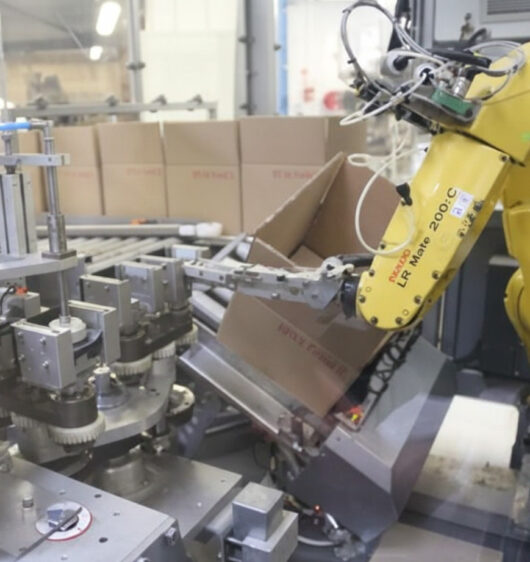
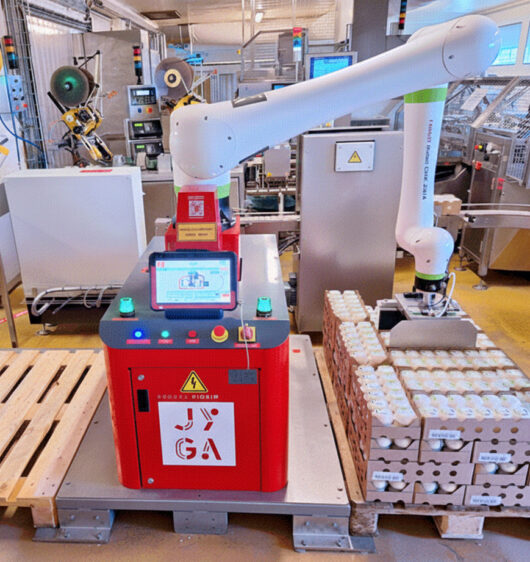
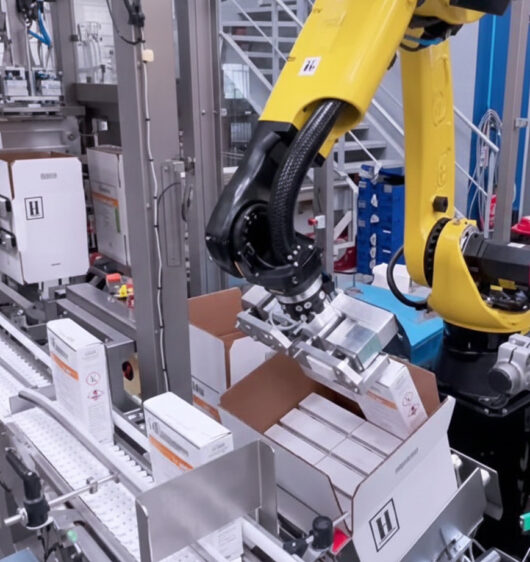
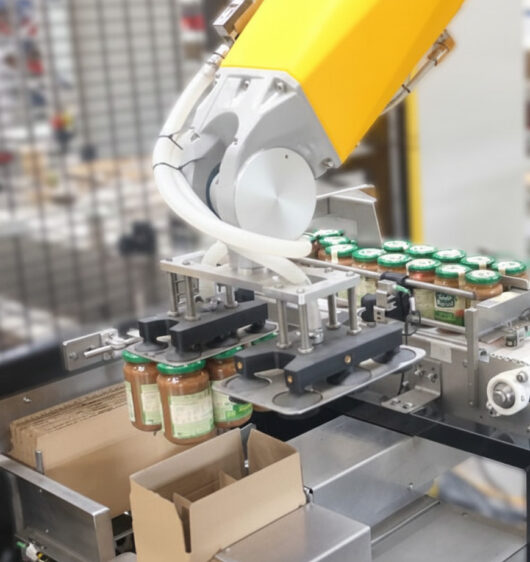
To support higher demand and reduce pressure on production, pharmaceutical manufacturers can integrate cobots into production and packaging lines. These collaborative machines are designed to assist people by taking over repetitive or physically demanding operations rather than simply replacing operators.
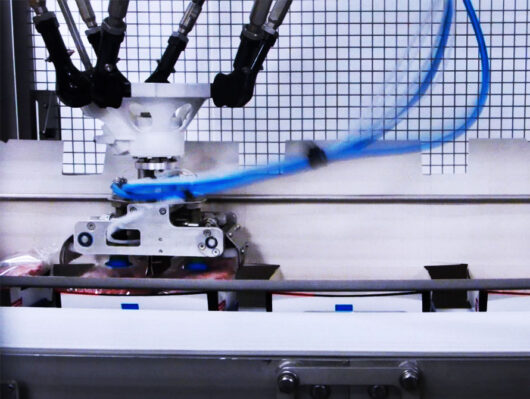
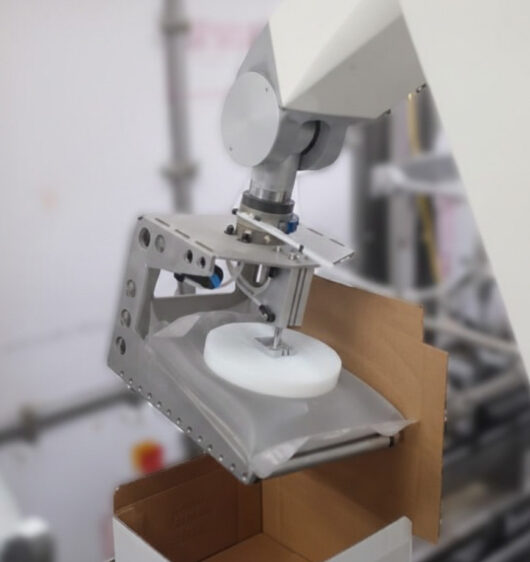
By handling repetitive tasks that require consistent attention, collaborative robotics can improve productivity. With suitable gripping solutions, a cobot can perform precise, repeatable movements over extended operating periods. Collaborative robots can also be designed into controlled environments where the application and hygiene requirements allow.
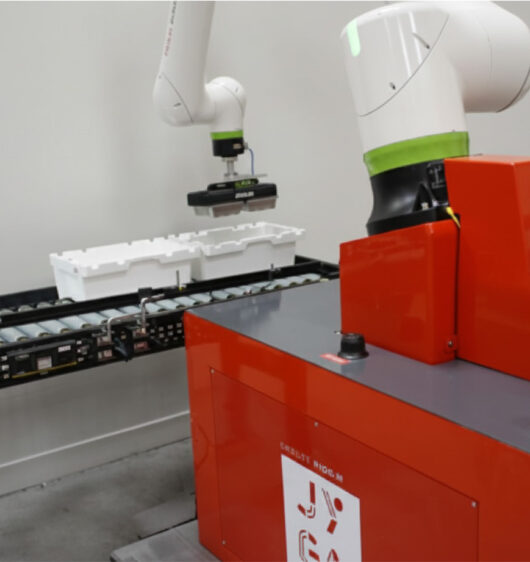
For suitable applications, collaborative robotics can offer a more compact and accessible route to automation than some conventional robotic systems. Their relatively small footprint can simplify integration into existing lines. User-friendly programming can also make it easier for trained operators to manage recipes and, where the system design allows, reassign the equipment to changing production needs.
By taking over repetitive and physically demanding tasks, collaborative robotics can improve working conditions and allow employees to focus on higher-value activities. Safety functions and the overall system design must be assessed for each application to ensure safe interaction around the cobot.
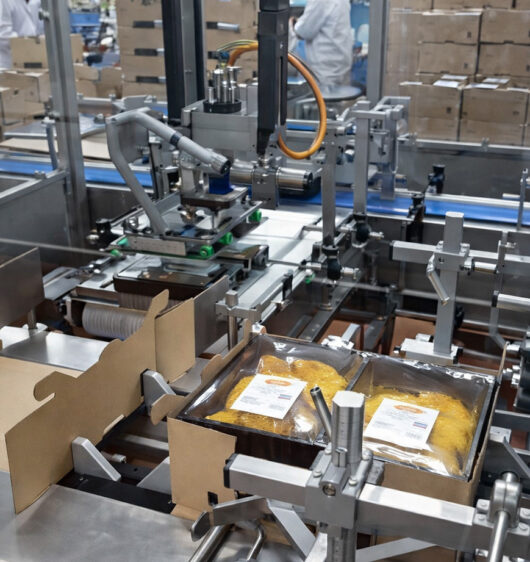
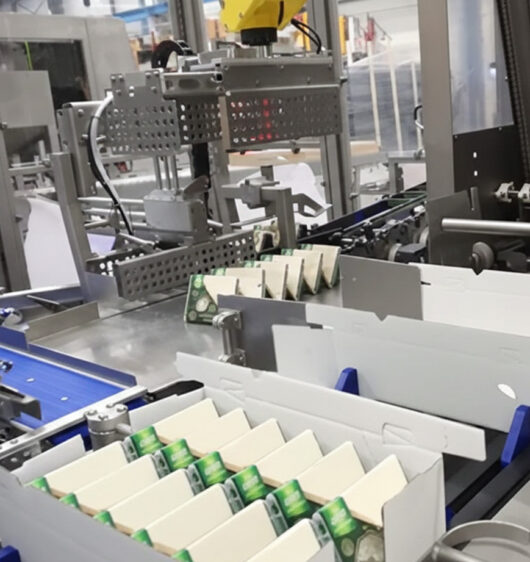
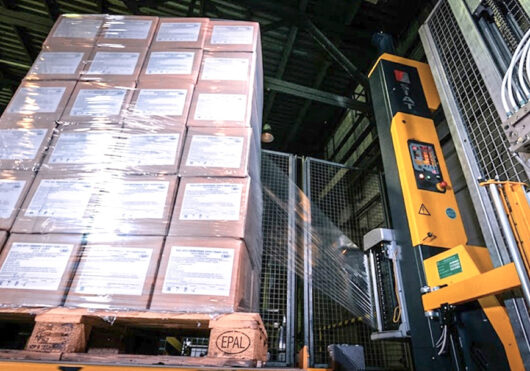
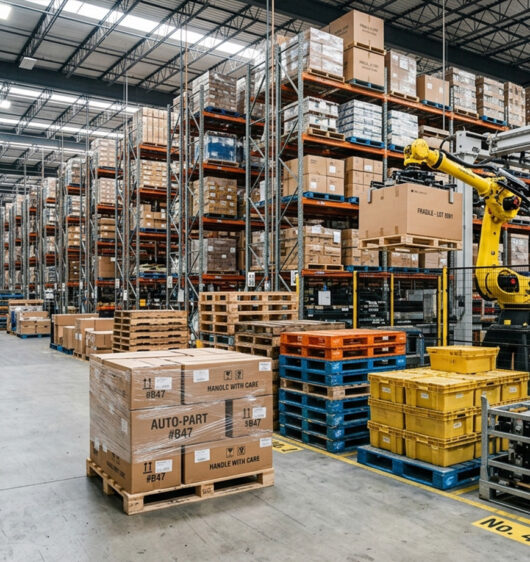
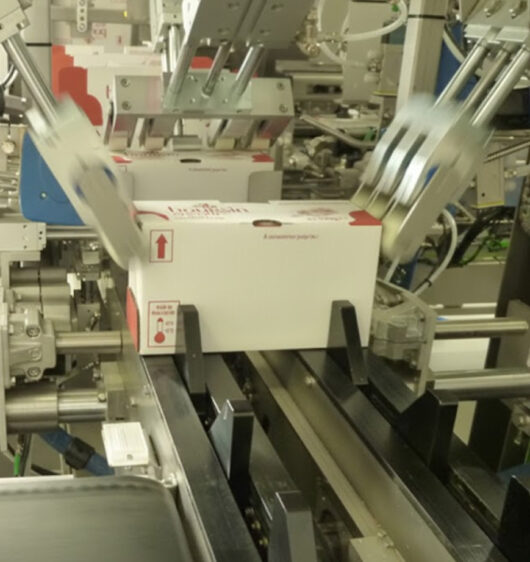
JYGA develops collaborative end-of-line solutions suited to pharmaceutical requirements. Depending on the application, the wider line can include batch or unit traceability, tamper-evident systems and aggregation solutions. JYGA integrates collaborative robotics into pharmaceutical end-of-line packaging based on experience developed across demanding industrial projects. Collaborative palletising solutions can also be configured for sensitive production environments.
Aurélie DUPONTCase Packing Division Manager
Would you like to know more? Find everything you need to know here, and much more!