What Is an Industrial Thermoformer?
Reading time : 5 min

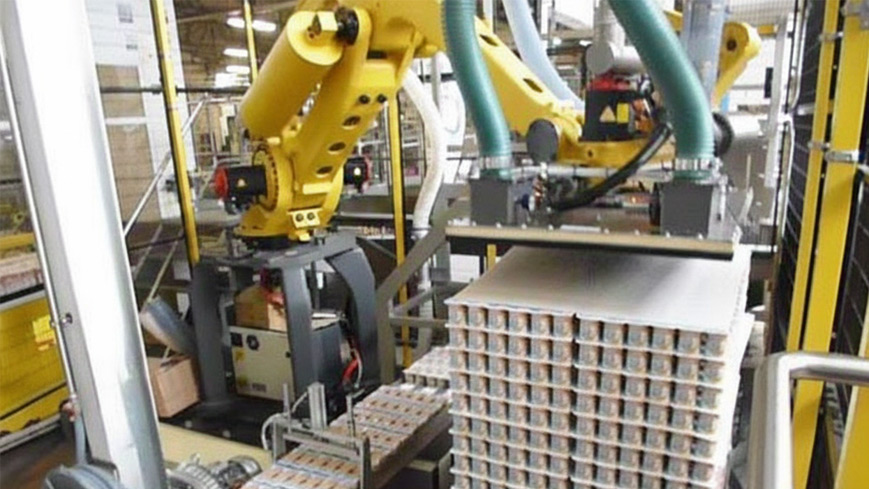
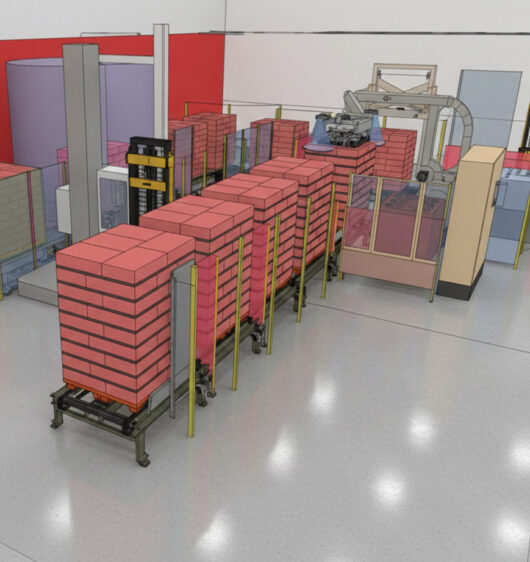
Used at the very end of the line, automatic palletising groups cases or other packaged products on a common load carrier, usually a pallet, to simplify handling, storage and transport. Automating this task offers several advantages. Here is what an automatic palletiser can bring to a production line.
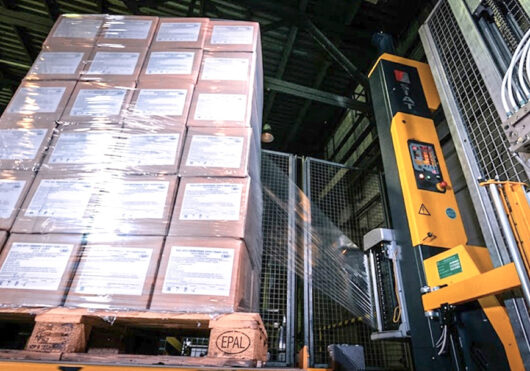
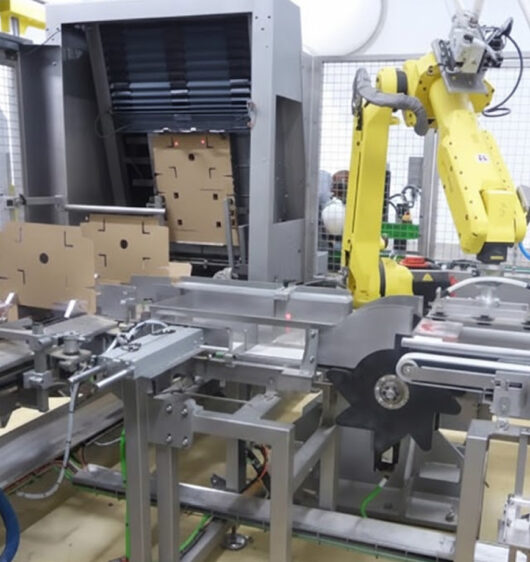
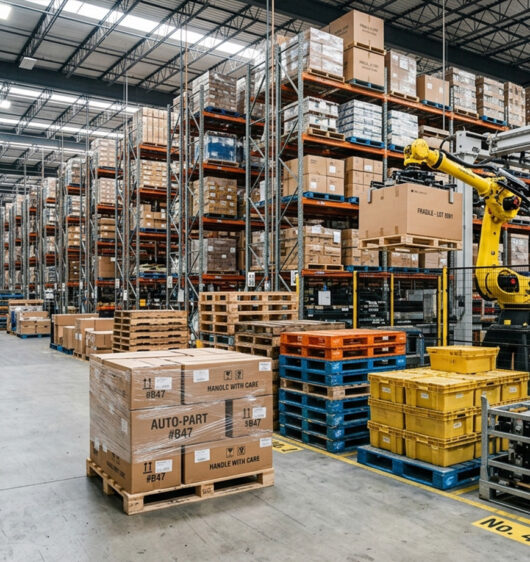
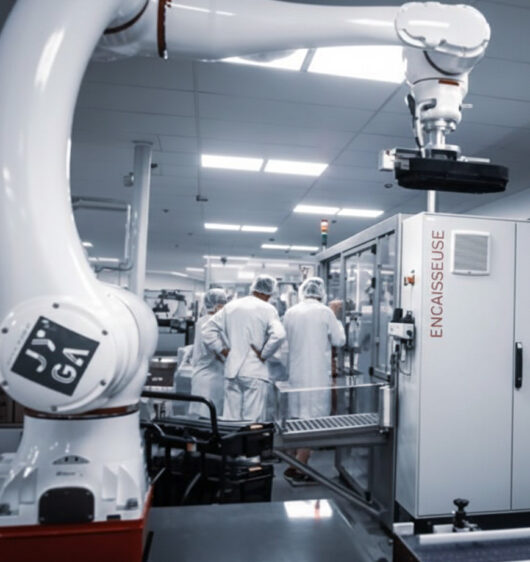
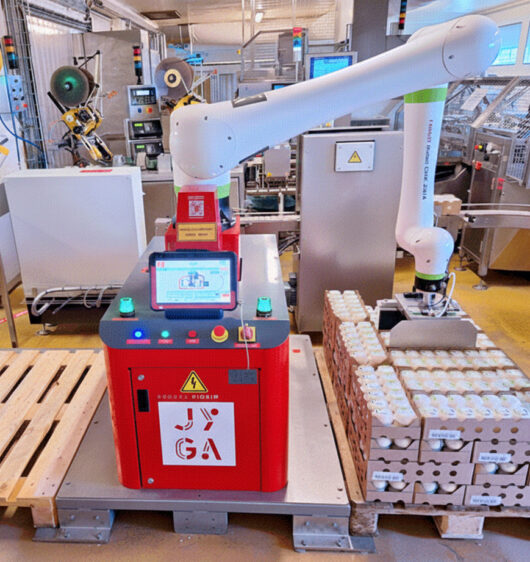
An automatic palletiser is an industrial robotic system that picks products, most commonly cases, and places them on pallets. It is generally one of the final production operations before goods are sent into distribution. Automatic palletising can be complemented by additional modules such as stretch wrapping and layer-pad insertion.
Integrating a palletiser at the end of the line can provide several benefits. By reducing manual errors and delivering repeatable handling, the system can improve productivity and load quality. A robotic palletiser can also reduce physical risks for operators by taking over heavy lifting and repetitive movements associated with musculoskeletal disorders. Operators can then focus on higher-value tasks. Because cases are placed accurately and consistently, palletised loads can also be better protected during transport and storage.
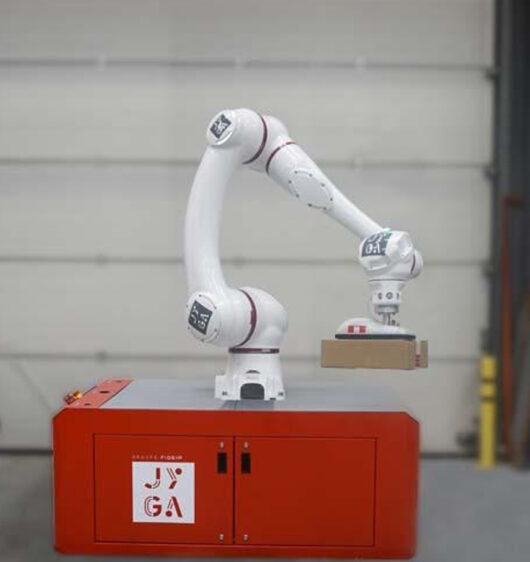
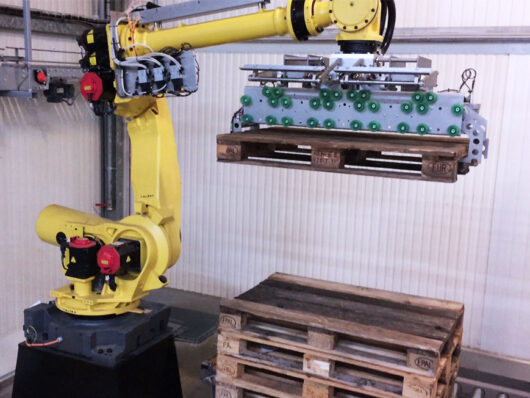
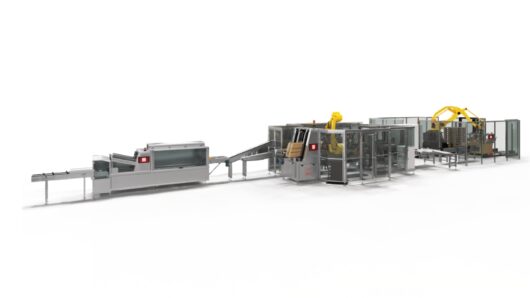
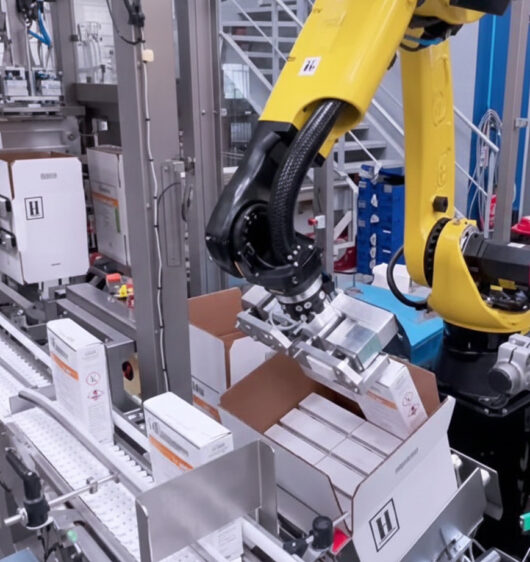
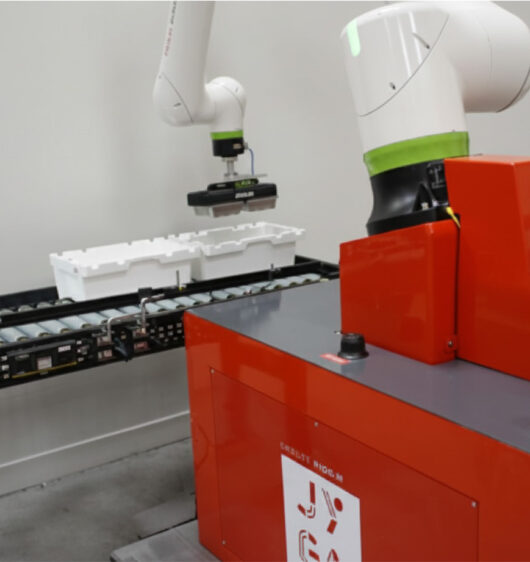
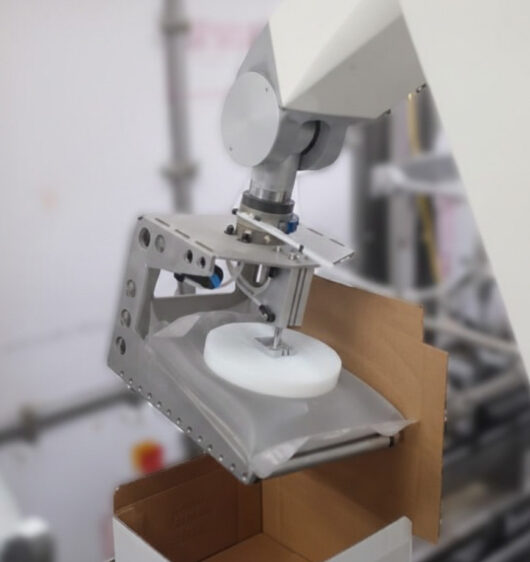
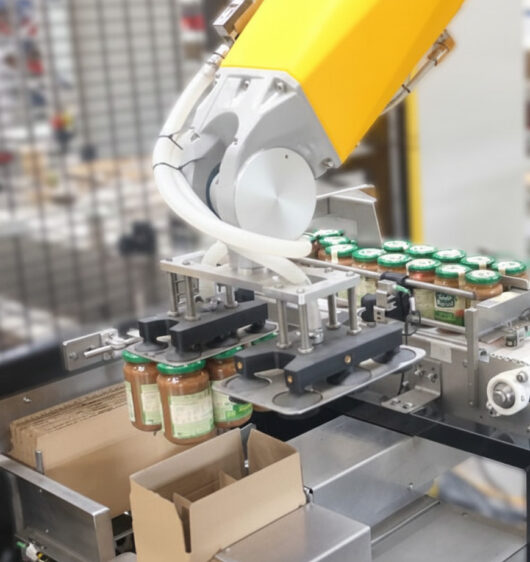
Several solutions are available for automating palletising. A single-line palletiser is a common configuration. Equipped with an end-of-arm tool such as a clamp, fork or vacuum plate, it can be adapted to the production line and the products being handled. Where several lines need to be automated, multi-line palletisers can serve two to four lines simultaneously. Line management is handled through the human-machine interface, allowing operators to change settings and configure machine tasks. Compact models are also available where floor space is limited. Designed for easier installation in constrained areas, this type of palletiser can be configured around current and future requirements. Automatic palletisers can also use collaborative robotics for applications where closer interaction with operators is required and the overall risk assessment supports that configuration.
Our team is here to advise you.
Different programming technologies may be used depending on the palletiser and the application. JYGA places particular emphasis on operator ergonomics. The main system controls are accessed through the human-machine interface. JY’TOOL, available with JYGA palletising solutions, can calculate palletising patterns to optimise pallet loading. The tool is designed to be intuitive so operators can create and manage palletising recipes from the control interface. The same interface can be used to configure, launch and analyse palletising robot trajectories.
With more than 25 years of innovation, JYGA has supported many industrial companies with automatic palletising projects. Whether the objective is to protect goods, optimise vehicle loading or make better use of storage space, JYGA’s teams analyse each application’s requirements and propose a suitable solution, from collaborative palletising to multi-line systems. Each product has specific gripping requirements to maintain its condition during handling. JYGA therefore designs and integrates palletising systems around the product, transport method and production constraints.
Aurélie DUPONTCase Packing Division Manager
Would you like to know more? Find everything you need to know here, and much more!