What Is an Industrial Thermoformer?
Reading time : 5 min

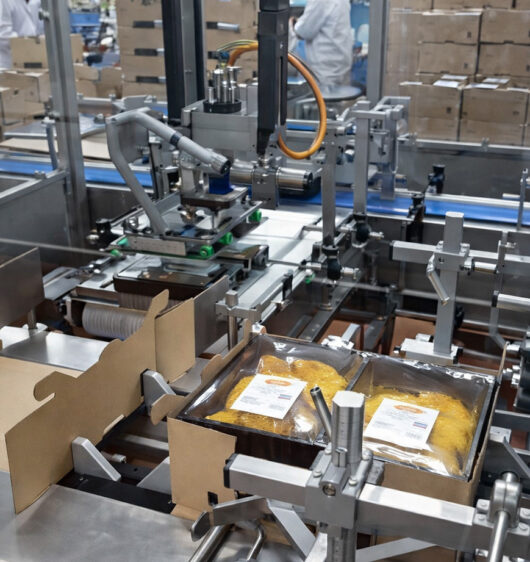
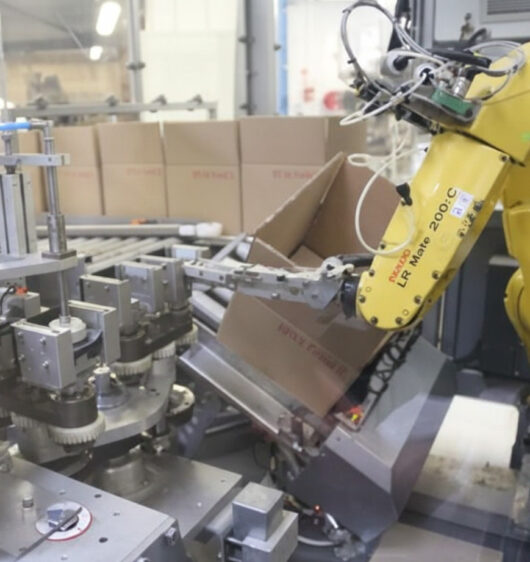
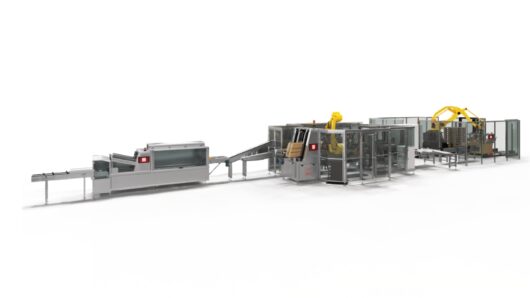
A wrap-around case packer is a case packing machine that forms a case around a group of products from a flat cardboard blank. Unlike RSC case packing, the cardboard is not first erected and then filled: it is folded, closed and glued around the products.
This technology is used at the end of packaging lines when products need to be grouped in secondary packaging before palletising, storage, transport or shelf presentation. It is used in many industries, including food and beverage, cosmetics, personal care, healthcare and general consumer goods.
The main advantage of a wrap-around case packer is its ability to adapt the cardboard to the product. The case can be closed, open, ventilated, shelf-ready or designed specifically for retail presentation. Depending on the format and transport constraints, it can also reduce empty space inside the pack.
For a broader overview of case packing equipment, see our automatic case packers. This article focuses specifically on the wrap-around case packer.
A wrap-around case packer is a secondary-packaging machine that forms a case around the products. It uses a flat cardboard blank designed for the required final case format. The blank is taken from a magazine, positioned in the machine and then folded around the product group.
The term “wrap-around” describes the basic principle: the cardboard wraps around the product or batch instead of products being loaded into an already formed case.
This approach can create secondary packaging suited to transport, storage, shelf presentation, ventilation, product retention or easy opening at the point of sale.
A conventional case packer associated with an RSC case forms the case before products are introduced. The case is then closed with its flaps, using adhesive or tape depending on the configuration.
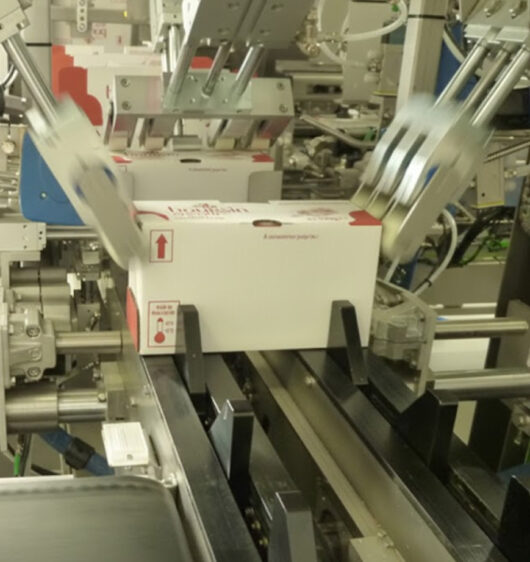
A wrap-around case packer works differently. It starts from a flat cardboard blank, positions the products and forms the case around the group. Folding, closing and gluing take place as part of the same machine cycle.
The key difference is therefore the sequence. An RSC case is erected and then filled; a wrap-around case is formed around the products.
For a detailed comparison, see our article on the difference between wrap-around and RSC case packing.
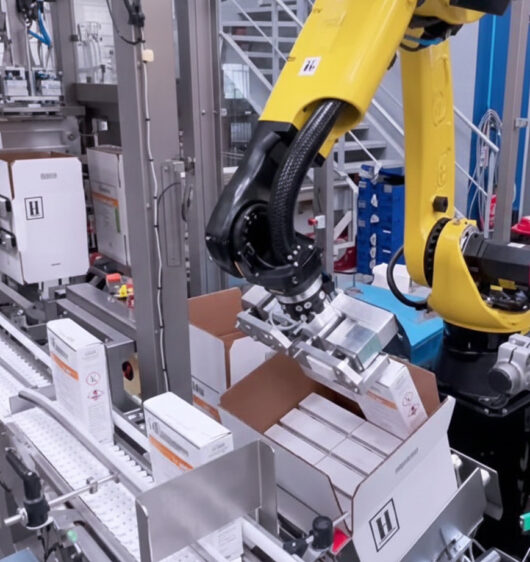
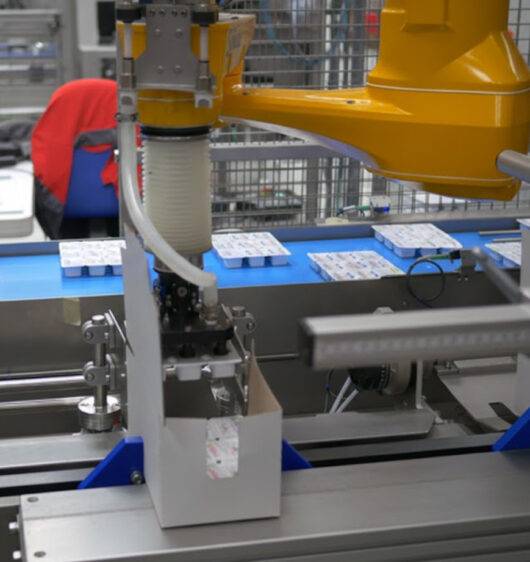
A wrap-around case packer works from flat cardboard blanks. Products arrive from the packaging line, usually by conveyor. They are grouped according to the required number per case and positioned accurately on or inside the blank.
The machine then performs the folding, closing and gluing operations. Depending on the case design, it can form a base, side panels, top flaps, shelf-ready edges or a completely closed case.
The exact process depends on product type, case format, products per group and required case-packing throughput.
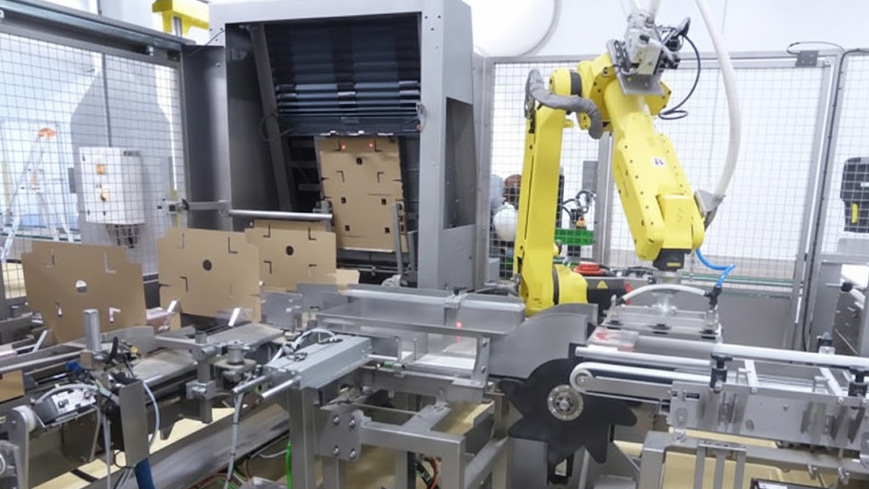
The flat cardboard blank is central to wrap-around case packing. It is designed around the product, final format, required retention and intended use of the case.
It can include flaps, fold lines, gluing areas, opening perforations, cut-outs and features that simplify shelf presentation. This allows wrap-around cases to cover applications including transport, shelf-ready packaging, product display and ventilation.
The blank should not be treated as a minor detail. Its design influences case formation, product stability, palletising and downstream handling.
A wrap-around case packer combines several operations in one cycle. The flat blank is first taken from the magazine. Products are grouped and positioned, then the cardboard is folded around the batch.
Closing is generally carried out with adhesive, often hot-melt. Depending on the case, the machine can bond top flaps, side areas, shelf-ready edges or other features designed into the blank.
This method creates cases that are closely matched to the products, but it requires the cardboard, machine, product and case-packing pattern to be designed as a coherent system.
Our team is here to advise you.
A wrap-around case packer can form several types of secondary packaging. Common formats include open cases, closed cases and shelf-ready trays. Selection depends on the product, required protection, retail presentation and logistics constraints.
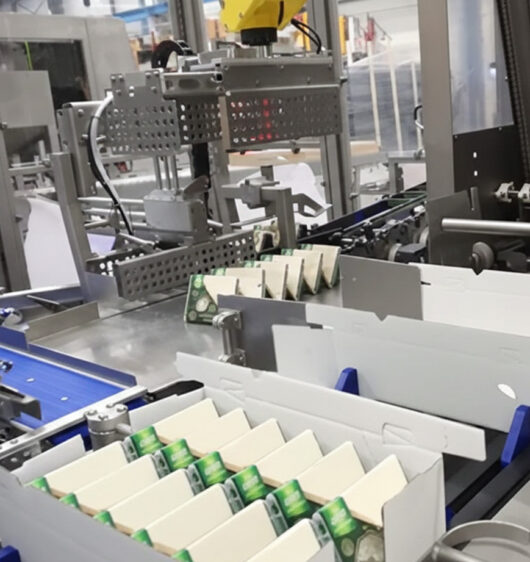
An open-case wrap-around case packer forms a case without a complete top closure. It is often used for shelf-ready cases, tapered cases or open trays.
This format is particularly suitable for self-supporting products that contribute to the strength of the complete pack, such as boxes, cartons, pots and other stable products.
The absence of a full top closure simplifies the pack and improves product access. It is an attractive option when point-of-sale presentation is as important as transport.
A closed-case wrap-around case packer forms a complete case around the batch. The flaps are closed and glued, providing additional protection for transport, handling and palletising.
This format is suitable for many self-supporting and non-self-supporting products, including bottles, trays, boxes, cartons and pots. It can also include perforations that simplify opening in store or convert the case into a display format.
A closed case is often selected when product protection is the priority while retaining wrap-around benefits such as a closely fitted case and flexible format design.
A Wrap-Around Case Packer for trays with ledge sits between an open and a closed case. Partial or full upper retaining panels can be used depending on the required design.
This format is often used for non-self-supporting or difficult-to-retain products such as certain trays, pizzas, yoghurts and fresh products. Ventilated designs can also help airflow for some food applications.
A shelf-ready tray retains the products while maintaining an opening and presentation suited to retail use.
A wrap-around case packer can handle a wide variety of products provided that the case format, loading system and cardboard blank are designed appropriately.
It is particularly useful when secondary packaging needs to do more than transport products. It can also present, retain and display products or simplify their handling in store.
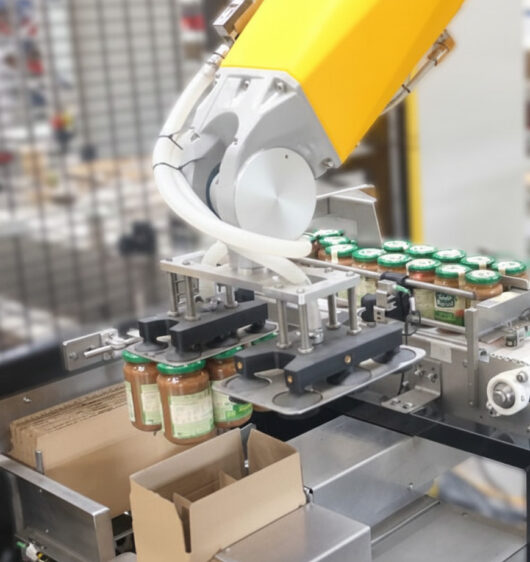
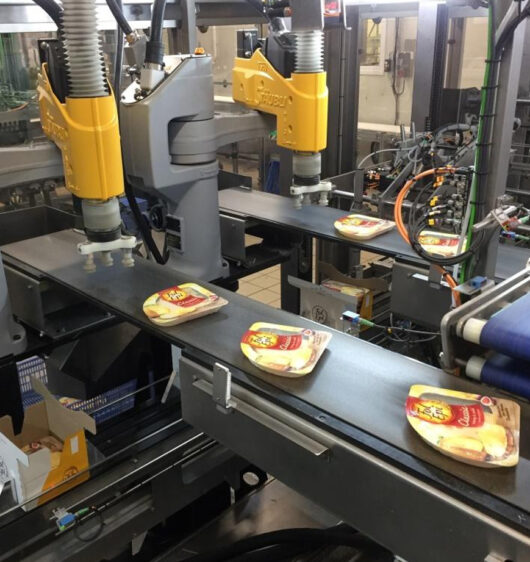
In food and beverage, wrap-around case packing can be used for trays, pouches, pots, cheeses, biscuit packs, bakery products, fruit-purée pouches, film-wrapped products and fresh products.
This type of case packing is useful when the case needs to support shelf presentation, ventilation or product access. An open or shelf-ready format can simplify retail replenishment, while a closed case provides greater protection during logistics operations.
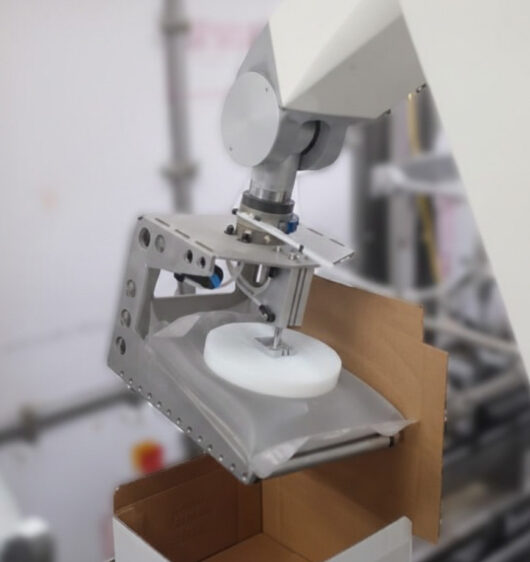
JYGA has, for example, delivered a wrap-around case packer for packaged brioche products, using open cases for several product formats.
In cosmetics, personal care and healthcare, a wrap-around case packer can pack bottles, cartons, tubes, pots, pouches, boxes and other packaged products.
Requirements often relate to product protection, presentation quality, batch grouping and logistics preparation. Cases can be designed for storage, shelf replenishment or distribution through different channels.
In these industries, case-format selection should also consider product fragility, the perceived quality of the packaging and the level of retention required during transport.
The benefits of a wrap-around case packer depend on the product and how the case will be used. It can help tailor the cardboard to the product, simplify shelf replenishment and reduce some end-of-line handling.
A wrap-around case is created from a blank designed around the product or batch, so it can follow product dimensions more closely than a standard case.
This can reduce empty space, retain products more effectively and limit movement inside the case during transport. It also allows secondary packaging to be adapted to palletising and presentation requirements.
Some wrap-around formats are designed as shelf-ready packaging. The case can be open, perforated, ventilated or designed to present products directly in store.
This can reduce shelf-replenishment time and handling. Staff may not need to remove every product from the secondary packaging because the case itself becomes a display support as well as a transport pack.
A wrap-around case packer can help create a case closer to the actual volume of the product batch. This can reduce unused space and support more coherent pallet loads.
The benefit depends on the product, blank, products per case and logistics constraints. Cardboard cost should therefore be considered alongside mechanical strength, pallet behaviour and downstream usability.
Automated wrap-around case packing reduces repetitive manual handling. Products are grouped, positioned and packed by the machine at a more consistent rate than a manual station.
For operators, this can reduce repetitive movements and product or case handling. Their role shifts towards replenishment, line monitoring, format changeovers and quality checks.
Selection should start with the product and how the finished case will be used. It is not enough to choose between an open, closed or shelf-ready case. Product behaviour, throughput, cardboard design, palletising and workshop constraints all need to be considered.
Before integrating a wrap-around case packer, assess:
This assessment avoids selecting a machine solely on case format. A wrap-around case packer must be coherent with the product, cardboard, layout and actual use of the secondary packaging.
At JYGA, a wrap-around case packing project begins with analysis of the product, required case and production flow. The objective is to define a coherent configuration covering case format, product gripping and grouping, gluing and discharge of full cases.
In one biscuit-production project, JYGA designed an open-case wrap-around machine for packaged brioche products with several formats. This type of application illustrates the value of wrap-around packing when the manufacturer needs secondary packaging to be tailored to product and distribution requirements.
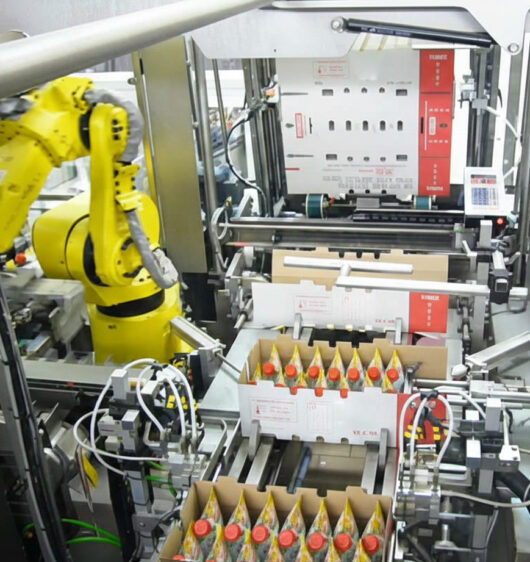
Other robotic case packing projects demonstrate the range of possible applications, including food products, cheeses, pots, pouches, cartons and other packaged products. Depending on the application, the machine can integrate different grouping, loading, forming, gluing and full-case handling modules.
For a manufacturer, the question is rarely simply which “wrap-around machine” to choose. The real task is to define the right case format and line architecture so that secondary packaging meets production, logistics and retail requirements.
A wrap-around case packer forms a case around the products from a flat cardboard blank. It differs from an RSC case packer, where the case is erected before it is filled.
The technology can produce open, closed, shelf-ready and other case formats adapted to their final use. It can address requirements for protection, presentation, ventilation, shelf replenishment and reduced empty space.
The best solution depends on the product, case format, throughput, number of references, palletising constraints and line layout.
Would you like to assess a wrap-around case packing solution for your products? JYGA can analyse your formats, cardboard and end-of-line requirements to define an appropriate system.
Aurélie DUPONTCase Packing Division Manager

Would you like to know more? Find everything you need to know here, and much more!