What Is an Industrial Thermoformer?
Reading time : 5 min

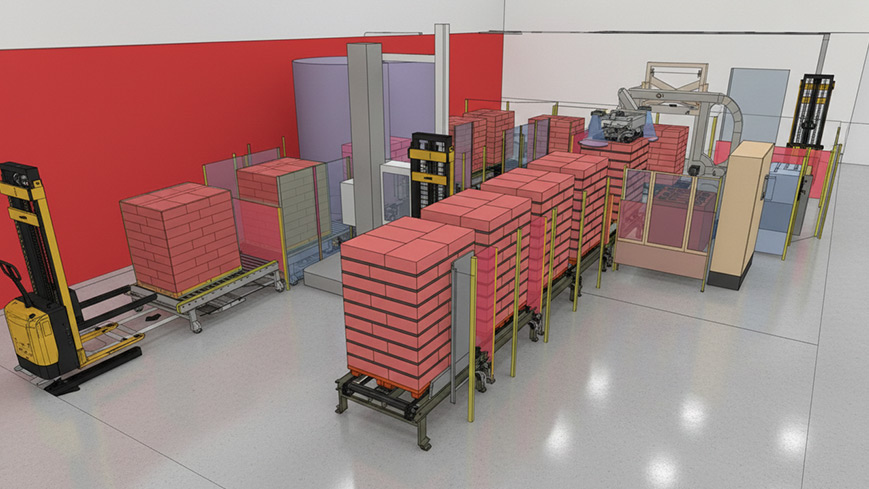
Depalletising is the operation of removing products from a pallet and directing them to another area, such as a conveyor, unpacking station, customisation line, storage area, order-preparation zone or another pallet. It applies to many formats including cases, cartons, sacks, bundles, boxes, bottles and other packaged products.
In a factory, the operation may look simple from the outside. In practice, manual depalletising can quickly become restrictive because of repetitive movements, loads to handle, variable throughput, potential errors and differences in working pace between operators. This is why many manufacturers are now assessing automated depalletising, particularly when volumes increase or products need to be fed back into a line consistently.
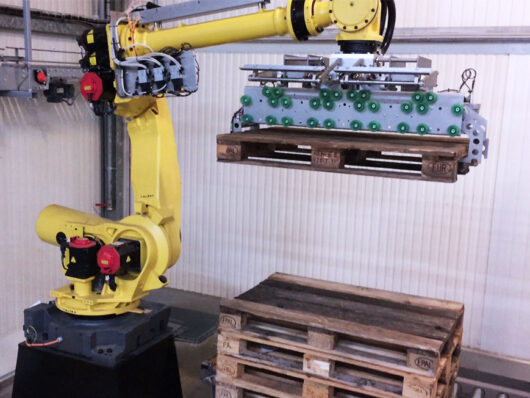
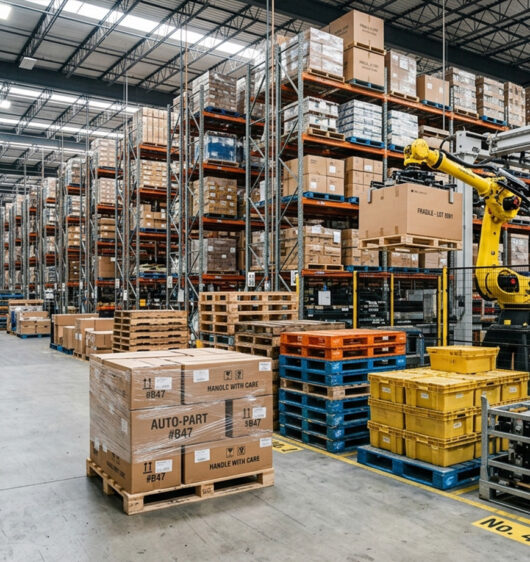
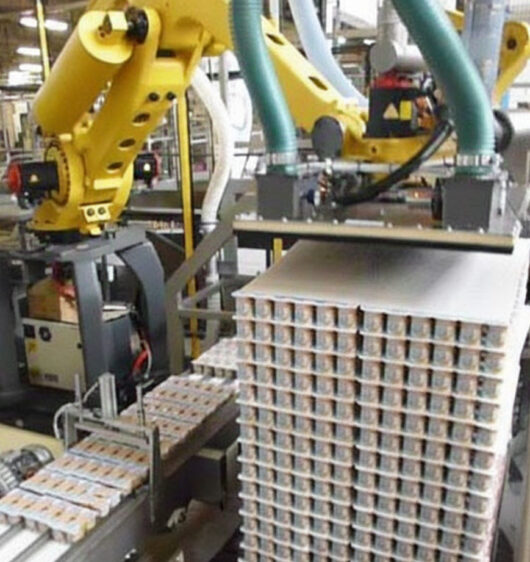
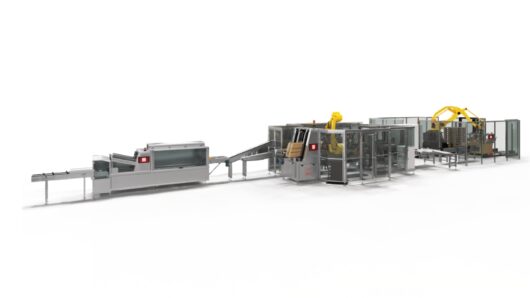
An automatic depalletiser can remove products individually, by row or by complete layer, then place them on a conveyor or another support. Depending on the application, the cell can integrate a depalletising robot, a dedicated gripping system, pallet handling, layer-pad management and infeed or outfeed conveyors.
This article explains depalletising, the main methods, its role in industrial lines and the points to analyse before automating this stage.
Depalletising is the reverse of palletising. It involves removing products stacked on a pallet and transferring them to another location. Products can be removed individually, by row or by complete layer depending on their shape, weight, stability and required throughput.
In industrial and logistics environments, depalletising often takes place upstream of a production or packaging operation. It can feed a line, release stored batches, sort products, prepare mixed assortments or return temporarily stored items to production.
A simple example is a pallet of full cases arriving at a plant. The cases need to be removed and sent to a conveyor feeding an unpacking operation, customisation line or inspection station. Depalletising converts pallet storage into a controlled product flow.
Palletising consists of stacking products on a pallet to simplify storage, handling or transport. Depalletising removes those products from the pallet so that they can re-enter the factory or warehouse flow.
The two operations can complement one another on the same line. Products can be depalletised at the line infeed, sent through a production or packaging operation, then palletised again after processing, inspection or preparation.
The difference is therefore the direction of flow. Automatic palletising prepares products for handling or dispatch, while depalletising prepares products to be used, sorted, processed, inspected or repacked.
Industrial depalletising brings palletised products into a production flow. It reduces dependence on manual handling and helps supply downstream equipment consistently.
On a packaging line, it can be used to:
The operation is common wherever products arrive on pallets but must then be handled individually, in batches, by rows or by layers. It is used in production workshops as well as logistics platforms and preparation areas.
Our team is here to advise you.
A depalletiser can handle cases, cartons, sacks, bundles, bottles, boxes and other packaged products, provided that the gripping system is suited to the format, weight and stability of the product.
The technical solution depends heavily on the product. A rigid cardboard case is not gripped in the same way as a flexible sack. A film-wrapped bundle behaves differently from a stable box. Fragile products require gentler handling, while heavy formats need appropriately sized gripping equipment.
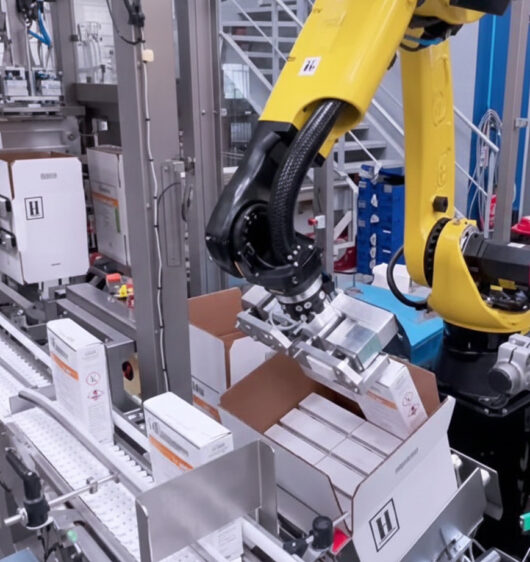
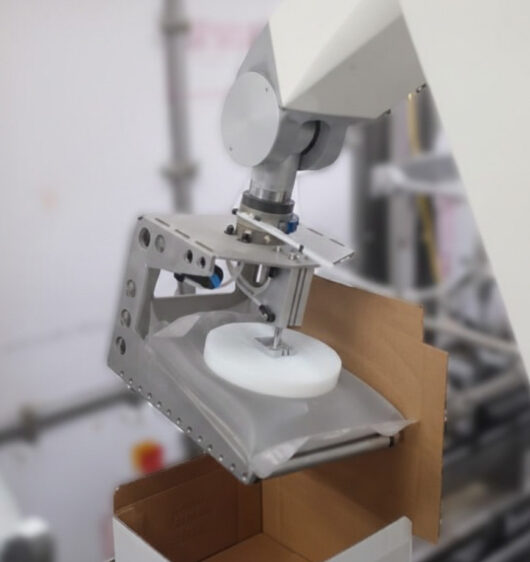
Gripping systems can use vacuum cups, clamps, fingers, plates or custom tools. Depending on the application, the robot can also manage layer pads between layers or handle empty pallets.
Manual depalletising remains common where volumes are low, formats vary widely or investment requirements are limited. It can be suitable for occasional operations, but its limitations become more apparent as throughput increases or handling becomes repetitive.
Operators may need to bend, grip, lift, move and twist repeatedly for several hours. Over time, this can contribute to fatigue, errors and musculoskeletal disorders (MSDs). Production also depends on the human working pace, which varies with the station, shift and working conditions.
Automated depalletising aims to stabilise this stage. It does not remove the operator’s role; instead, operators focus more on supervision, replenishment, settings, format changeovers and inspection.
An automatic depalletiser removes products from a pallet using a robot or mechanical system, then places them on a conveyor, table, another pallet or downstream station. It can work by individual product, row or layer.
The cycle generally follows four stages. The pallet enters the cell. The system identifies product positions or follows a known pattern. The end-of-arm tool grips the products according to the selected method. The robot then transfers them to the target area.
Depending on the configuration, the cell can include conveyors, a layer-pad magazine, pallet handling, guarding, a human-machine interface and inspection systems.
The value of an automatic depalletiser is not limited to higher throughput. It also affects workstation organisation, operator safety, flow consistency and protection of the products being handled.
Manual depalletising exposes operators to repetitive movements and sometimes heavy handling. Automating the operation reduces direct physical effort. Operators no longer need to remove every case or sack from the pallet and can instead supervise the cell, replenish pallets, manage format changes or respond to anomalies.
This is particularly important in workshops where the same movements are repeated throughout the day. It matters to production, maintenance and quality managers as well as plant management, who need to balance throughput, safety and workforce availability.
A depalletising robot repeats the same cycle consistently. This helps supply downstream stations more reliably, whether they are conveyors, case packing equipment, customisation lines, inspection systems or repalletising stations.
It can also reduce flow interruptions. Irregular manual feeding can create micro-stoppages, accumulations and unnecessary waiting. With a correctly sized automated cell, depalletising becomes part of the overall line rhythm.
Poor gripping, a badly placed case or a sack handled too quickly can lead to deformation, falls or losses. Automation makes it possible to adapt the gripping method to the product, using vacuum cups for some cartons, clamps for cases and dedicated tools for sacks or bundles.
The choice of end-of-arm tool is therefore central. It needs to reflect product weight, material, gripping surface, stability and acceptable fragility.
Automation becomes relevant when depalletising requires too many operators, creates excessive physical strain, causes throughput irregularities or limits the supply of a production line.
Warning signs include frequent load handling, difficult workstations, fatigue-related absence, higher throughput requirements, repetitive formats, risk of breakage, limited space or the need to feed several lines.
Automation is not always the first answer. For very small volumes or highly variable work, a semi-automatic solution may be sufficient. When the flow is regular and formats are known, however, a depalletising robot can bring genuine stability to the station.
This assessment often forms part of a wider project to modernise an end-of-line production area, taking upstream stations, downstream equipment and operating constraints into account.
Our team is here to help.
The right automated depalletising solution depends first on the real production environment. Choosing a robot is not enough. The complete flow needs to be analysed, including incoming pallets, product formats, stack height, layer pads, required throughput, available space, safety, cleaning, maintenance and production changeovers.
Before sizing a depalletiser, consider:
This work avoids designing a cell that functions in theory but is difficult to operate every day.
The end-of-arm tool allows the robot to grip the product. It can use vacuum cups, clamps, fingers, a plate or a custom design depending on the format.
Its role is critical. A good tool needs to hold the product without damage, maintain a stable grip during movement and provide clean placement on the conveyor or target area. It should also remain compatible with format changes where the line handles several references.
Rigid cases may be handled with clamps or vacuum cups. Sacks often require greater care because the product can deform. Film-wrapped bundles require consideration of film strength and the stability of the complete pack.
This is often where the quality of a depalletising project is determined: the robot performs the movement, but the end-of-arm tool creates the real interface between machine and product.
An industrial depalletising project needs to be designed as part of the complete line. The machine never works in isolation: it receives pallets, handles products, feeds a downstream station and must remain accessible to operators and maintenance teams.
The challenge is therefore to create a solution suited to the existing line or new layout. This means understanding real site constraints such as product handling, pallet circulation, operator access, throughput, cleaning, safety, maintenance and future format changes.
Before selecting an automatic depalletiser, consider the whole flow: how pallets arrive, how products are gripped, where they are placed, which downstream equipment is involved and what operator interventions remain necessary.
This type of project can also form part of a broader complete end-of-line engineering approach, especially when depalletising needs to interact with conveying, packaging, case packing or palletising equipment.
In one JYGA project, a logistics operator needed to process frozen meat sacks stored on pallets with plastic layer pads. The task was to remove the plastic pads and replace them with cardboard layer pads. The operation had previously been carried out manually.
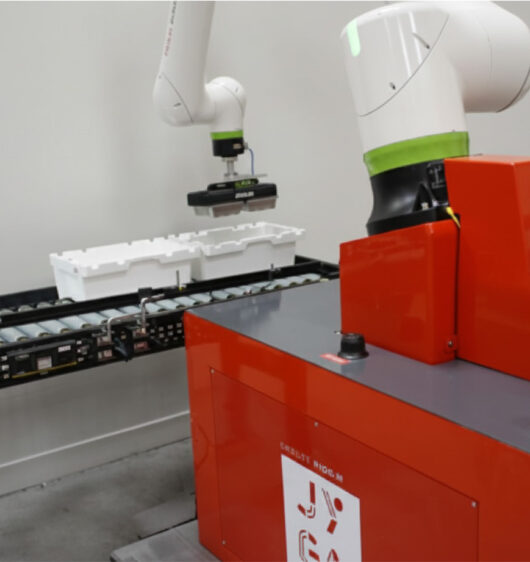
JYGA developed a robotic solution with two robots. The first picks layers of sacks and transfers them to a target pallet. The second removes the remaining plastic layer pads and stacks them for removal.
This application shows that automated depalletising can involve more than simply removing products from a pallet. It can include changing supports, replacing layer pads, repalletising, cold-environment requirements, reduced manual handling and adaptation to the customer’s flow.
For a manufacturer or logistics operator, this type of project automates a repetitive, physically demanding operation while stabilising production flow. The solution is designed around the product, throughput, available space and site-specific constraints.
See the complete example of depalletising and palletising frozen meat sacks.
Depalletising is a handling operation that removes products from a pallet so that they can re-enter an industrial or logistics flow. It can be manual, semi-automatic or fully automated depending on volume, formats and production constraints.
When the task becomes repetitive, physically demanding or limits throughput, automation is worth assessing. An automatic depalletiser can stabilise line feeding, reduce physical handling and adapt the gripping method to cases, sacks, bundles, boxes and other products.
Would you like to automate a depalletising operation or redesign part of your end-of-line flow? JYGA can assess your products, layout and the technical solutions best suited to your site.
Aurélie DUPONTCase Packing Division Manager
Would you like to know more? Find everything you need to know here, and much more!