What Is an Industrial Thermoformer?
Reading time : 5 min

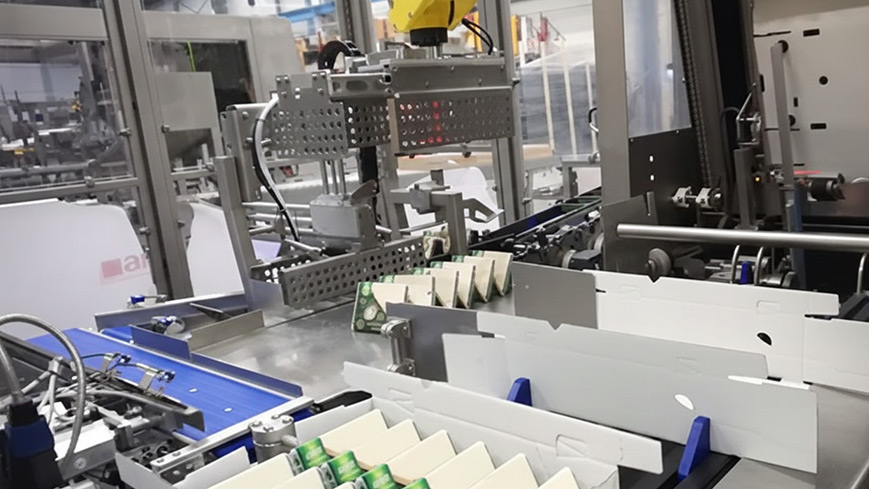
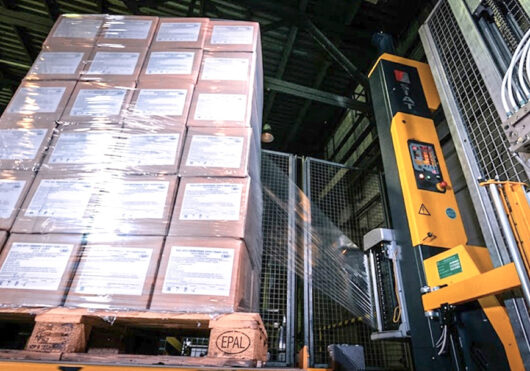
An automatic stretch wrapper automates the application of stretch film around palletised loads. How does this equipment work, and what benefits can it bring when integrated at the end of a production line?
Stretch wrapping is an important end-of-line operation. It helps hold products securely in place during logistics and protects loads from dirt and dust. Wrapping also creates a more stable unit for handling, helping make better use of storage and transport capacity.
Automating this stage with an automatic stretch wrapper can relieve operators of a repetitive and physically demanding task. Repeated manual wrapping movements can contribute to musculoskeletal disorder risks. Automation frees operators to focus on activities where their expertise provides greater value.
Adding an automatic stretch wrapper at the end of the line can also increase pallet dispatch speed and support overall line productivity. The machine can control film tension according to the load so that the appropriate amount of stretch film is applied and consumption is optimised.
Our team is here to advise you.
An automatic stretch wrapper applies stretch film around palletised loads at the end of the line. With a turntable system, the pallet is positioned on the rotating platform while the film carriage supplies and tensions the stretch film. The pallet rotates as the film is wrapped around the load.
Once the wrapping cycle is complete, the film can be cut and secured automatically so the pallet can continue into the logistics process.
Automatic stretch wrappers can handle a wide variety of pallet loads and are used in many industries, including food & beverage and pharmaceuticals.
An automatic stretch wrapper can use different wrapping principles. With a turntable wrapper, the pallet rotates while the film carriage applies the film around the load. With a rotary-arm system, the pallet remains stationary while a rotating arm carries the film around it.
The choice between a turntable and a rotary-arm stretch wrapper depends on factors including the available installation space, pallet stability and the number of pallets that need to be wrapped each day.
Integrating an automatic stretch wrapper depends on available space, production flows and the specific requirements of the business. Several project stages are essential.
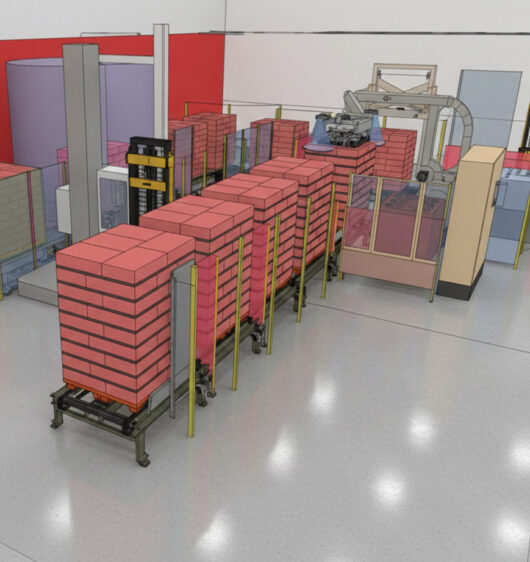
An analysis of the application determines the number of pallets to be wrapped, their dimensions and characteristics, and the required wrapping specification. The allocated area must provide sufficient space for the machine, potentially downstream of an automatic palletiser, as well as pallet infeed and outfeed and safe operator access. The installation is then configured to suit the application, including wrapping speed, film tension, number of wraps, cutting and sealing modes.
Operator training is required so teams understand machine operation, safety procedures, basic maintenance and troubleshooting. Testing is then carried out to confirm the settings and make any necessary adjustments before the wrapper is fully integrated into the production flow.
Integrating an automatic stretch wrapper requires technical expertise. An end-of-line automation specialist such as JYGA can support the integration of the equipment into the wider packaging system.
Aurélie DUPONTCase Packing Division Manager
Would you like to know more? Find everything you need to know here, and much more!