What Is an Industrial Thermoformer?
Reading time : 5 min

The pharmaceutical industry has undergone significant change, particularly since the global health crisis that began in 2020. Its characteristics and requirements already made it a highly specialised sector, with specific challenges. Recent years have added further demands. How can automation help meet these new challenges?
Global demand for medicines rose sharply over a short period, leaving the industry little time to scale production. One consequence has been an increasing number of medicine shortages.
To address these shortages, production throughput has had to increase. However, pharmaceutical manufacturing has specific hygiene and safety requirements. Some products, for example, must be packaged under sterile conditions. Increasing output is therefore essential, but it must be achieved while maintaining the same high standards of hygiene and production quality.
Finally, the growing pharmaceutical sector is facing increasing competition. Adaptability and flexibility are therefore essential for remaining competitive in an expanding market.
How can manufacturers increase output without compromising quality or market competitiveness? This is where pharmaceutical automation can deliver real value and help meet these new challenges.
Our team is here to advise you.
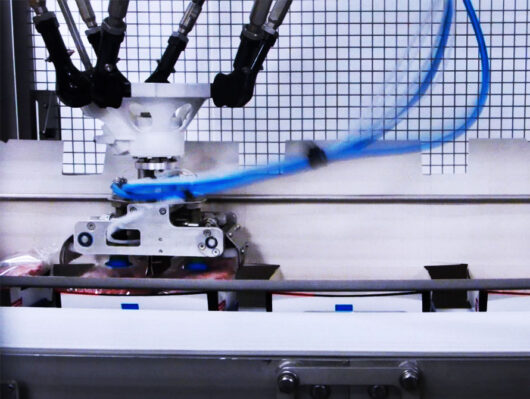
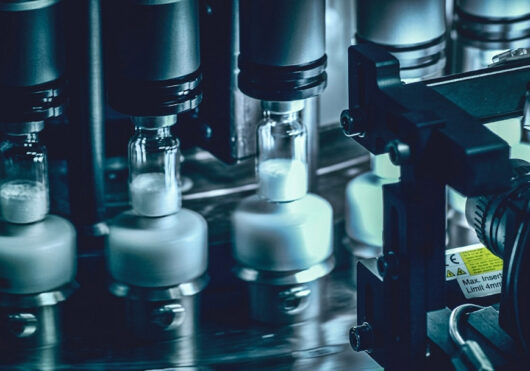
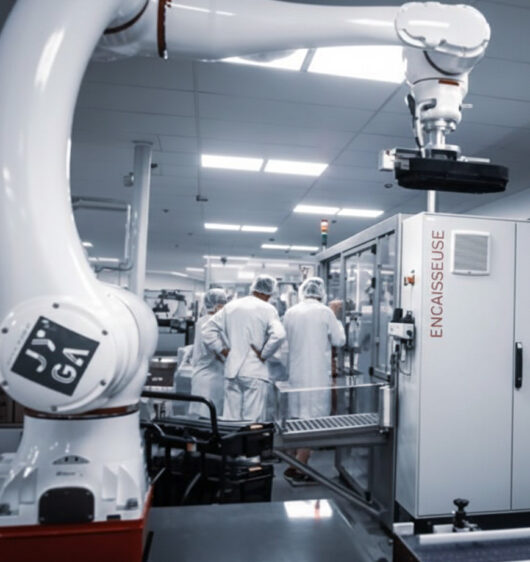
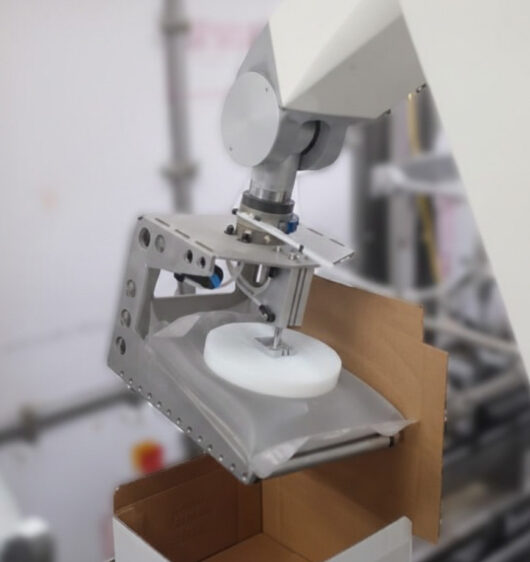
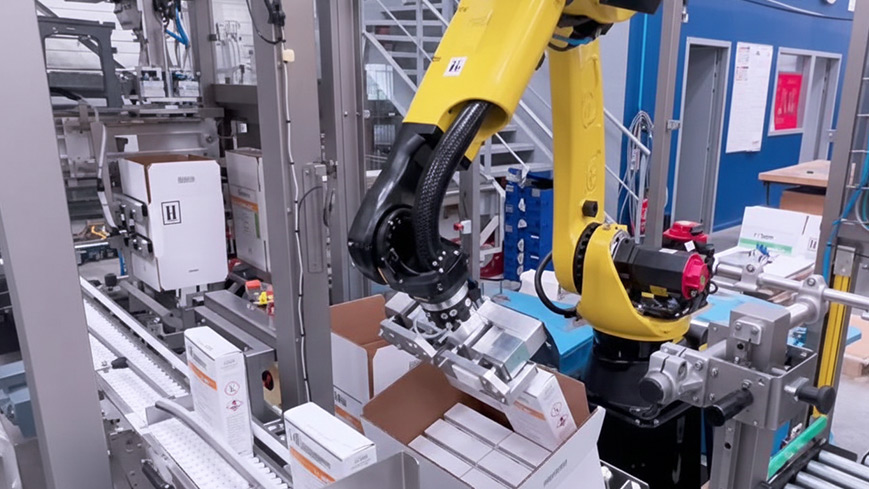
Pharmaceutical production can require extremely precise handling because containers may be fragile, liquids may be hazardous or contamination risks may need to be controlled. Automating pharmaceutical packaging enables highly precise movements at the throughput required for production while reducing contact with human operators and therefore limiting contamination risks.
This level of precision can be maintained over long operating periods, including continuous production, and across different production volumes. Automating the end of the production line can therefore help meet rising demand while maintaining, or even strengthening, the level of quality required for pharmaceutical products.
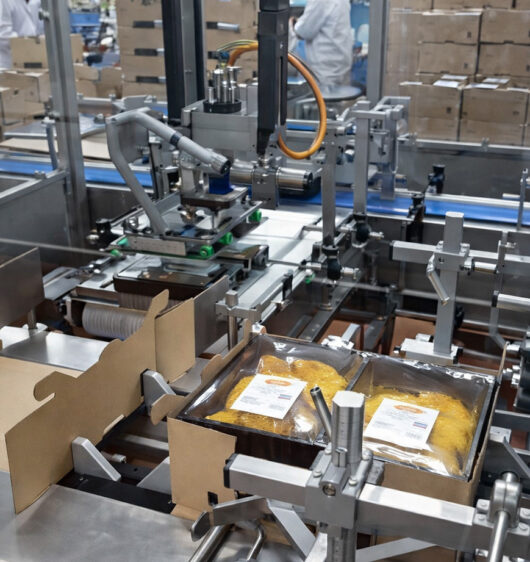
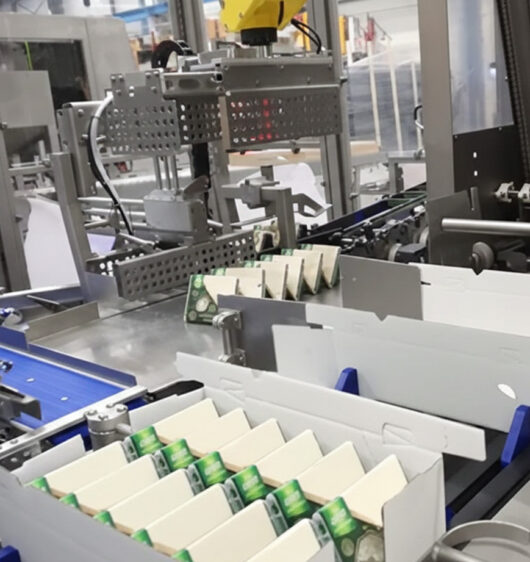
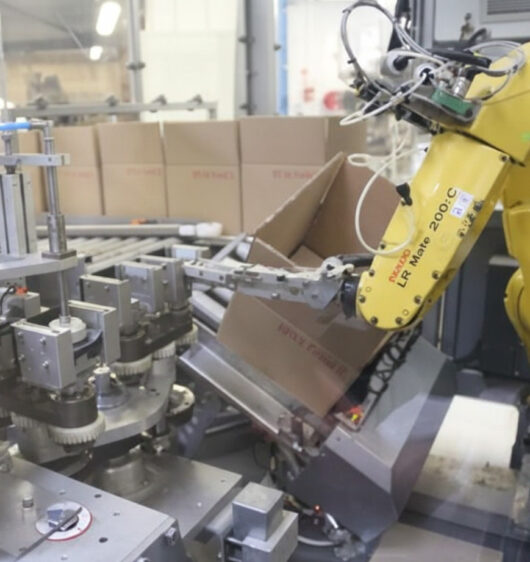
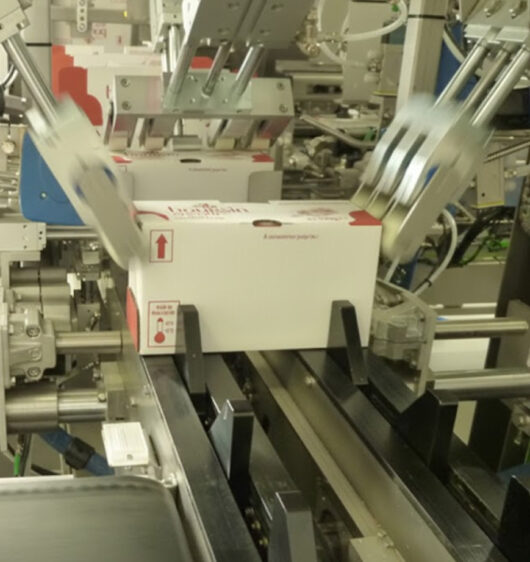
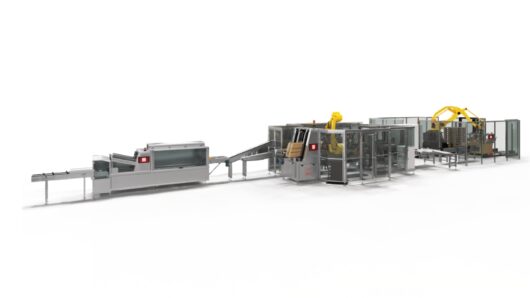
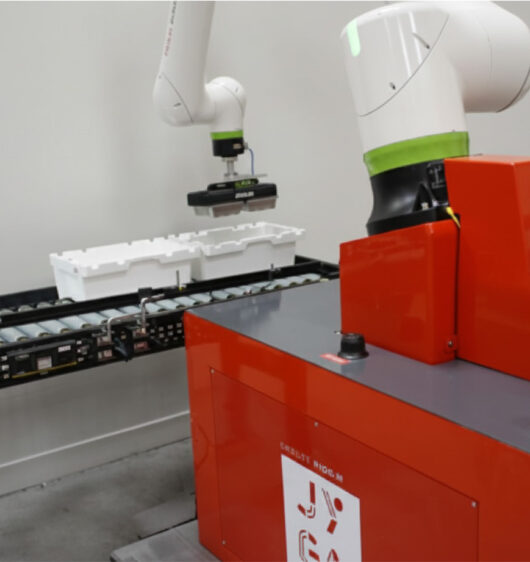
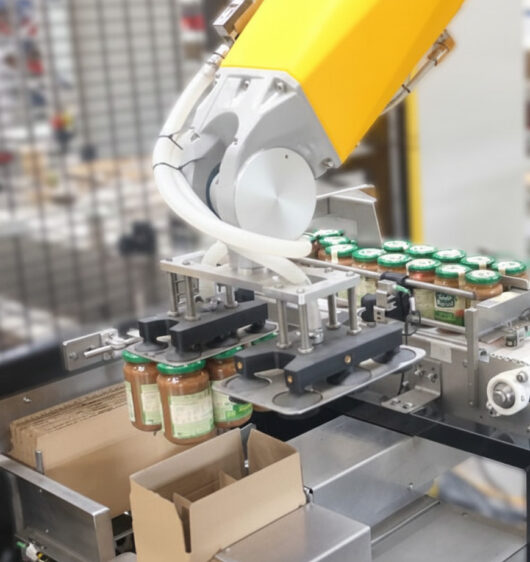
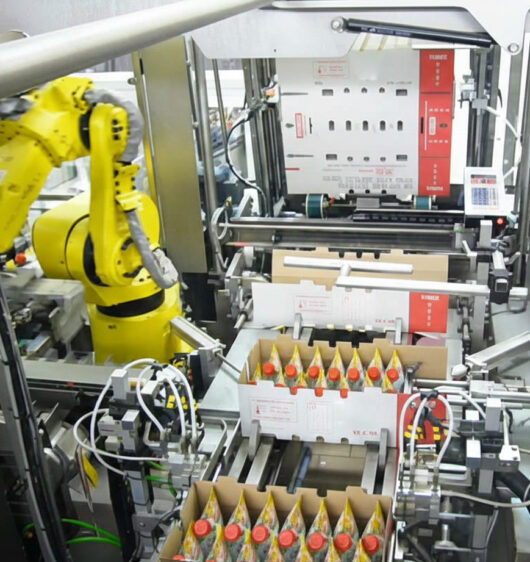
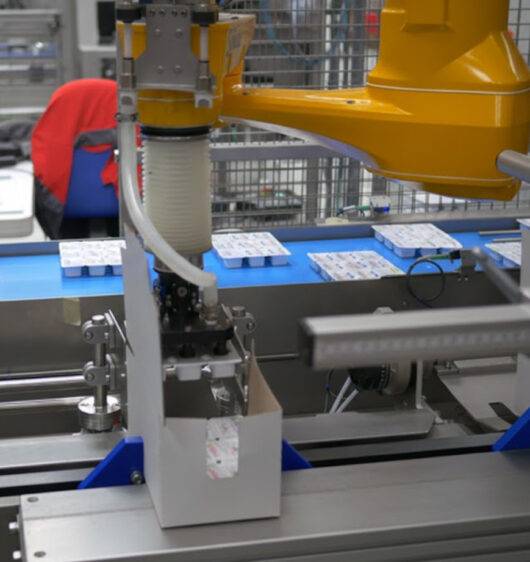
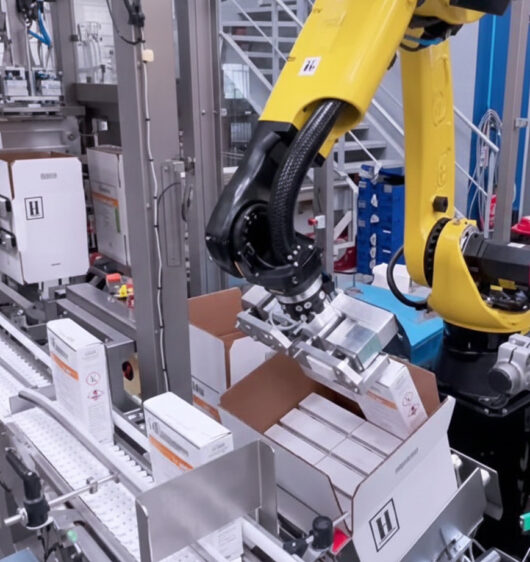
The flexibility of packaging machinery makes it possible to meet a wide range of requirements. A case packer can handle many types of products, including cartons, pouches and bottles or vials, even when they are small or fragile. Automating case packing or cartoning can therefore provide significant advantages for pharmaceutical manufacturers.
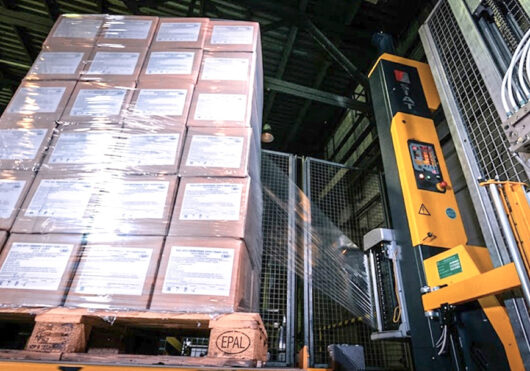
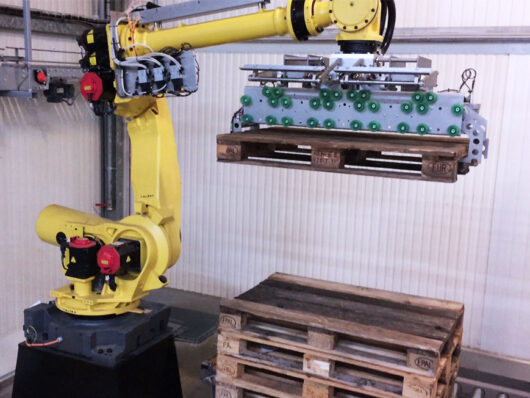
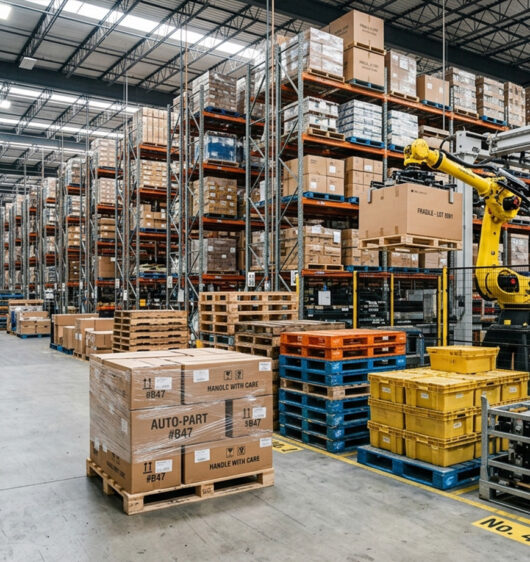
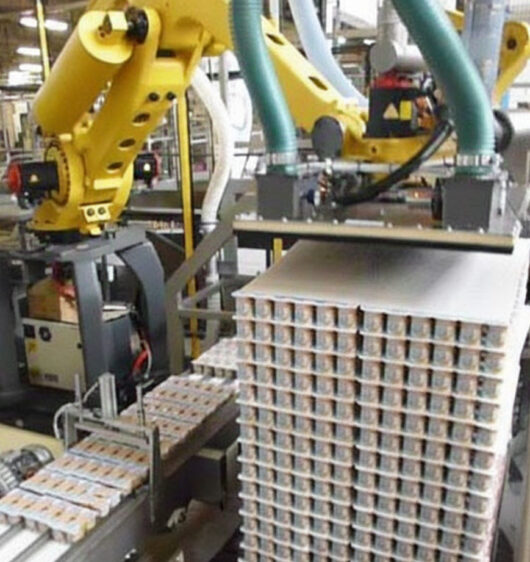
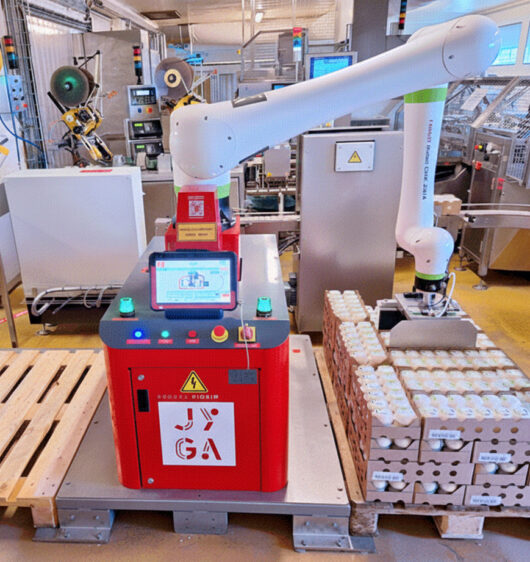
Automating pharmaceutical packaging can also provide a highly effective solution. Packaging can be handled safely, at speeds and with a level of precision that would be difficult to achieve manually. Palletising can also be automated, freeing operators from heavy lifting and repetitive movements that can contribute to musculoskeletal disorders. Operators can then focus on tasks that require human judgement and decision-making.
The pharmaceutical industry is facing new challenges. Automation can help address them by integrating robots into production lines. Manufacturers can increase productivity while continuing to meet demanding hygiene and safety requirements.
Aurélie DUPONTCase Packing Division Manager
Would you like to know more? Find everything you need to know here, and much more!